Zscaler 블로그
Zscaler 블로그의 최신 업데이트를 이메일로 받아보세요
The Microsoft 365 Outage Is A Wake-Up Call to Prioritize Business Continuity
Yesterday’s Microsoft 365 and Exchange Online outage impacted 430+ million users across 74 countries for 18+ hours, making it likely the biggest one to hit enterprises since the Crowdstrike outage of 2024. Like other recent disruptions to hyperscalers and major SaaS providers, it serves as a wake-up call for enterprises. When a critical, highly relied-upon cloud dependency goes dark, can your business continue to operate?
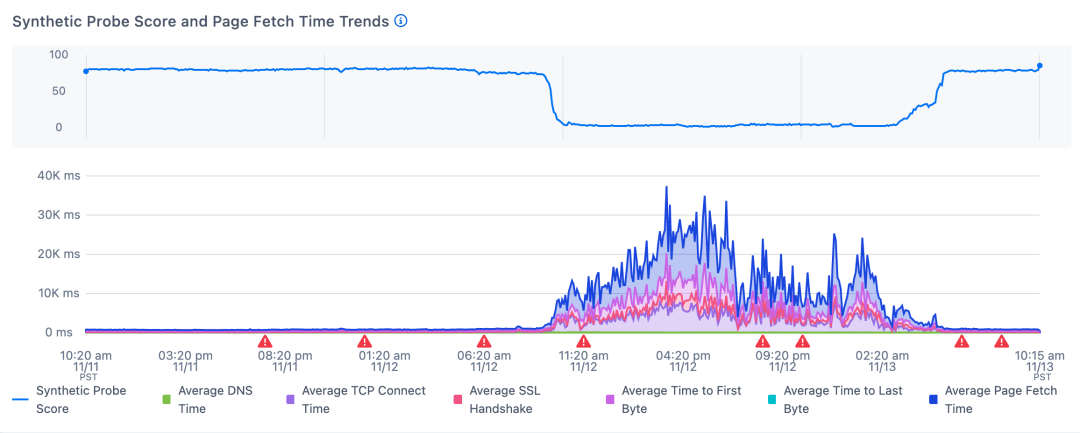
Zscaler Digital Experience (ZDX) showing downtime of Outlook Online
This outage offers important lessons for our resilience strategy:
Lesson #1: Identify & Prioritize Your Mission-Critical Services and Ensure You Have a Business Continuity Plan
Not all enterprise systems are created equal. If your HR portal goes offline for an hour, it’s an inconvenience, but the business survives. You can live with a standard 99.9% availability SLA for non-critical systems.
Critical systems are different. They require 99.999% resilience through a business continuity/disaster recovery strategy, as any minute of downtime can cost the business millions and reputational damage. Research from Oxford Economics puts the total cost of unplanned downtime for Global 2000 companies at $400 billion annually — $540,000 per hour.
Regulators agree. Under DORA, CPS 230, and ISO 22301, “Our cloud provider went down,” is no longer an acceptable defense. Enterprises must prove operational resilience across every critical dependency.
This is why CIOs are building toward a minimum viable IT stack — the three services that every organization needs to maintain during any disruption:
- Identity services
- Zero trust connectivity services
- Business-critical applications
Together, these three form the complete resilience chain. Miss any one, and your business will be disrupted.
Lesson #2: Don’t Take Shortcuts With Cloud Services
In the "good old days" of mainframe computing and corporate data centers, IBM and IT leaders had strict separation between their active production data centers and physically isolated backup data centers. If an unforeseen issue or outage occurred at the primary site, customers switched over to the disaster recovery data center in minutes, allowing business to carry on.
In the cloud era, we must maintain these same principles rather than relying purely on high-availability SLAs. The biggest and best platforms in the world still have disruptions. An architecturally independent business continuity cloud follows the same principles as the separate data center infrastructure, and provides insurance against cloud outages to maintain uptime and business productivity.
Lesson #3: Don’t Buy Your Applications and Security From the Same Place
Under massive suite licensing agreements, enterprises have increasingly consolidated their productivity, collaboration, and security tools under a single provider and hosted them on connected architecture, leading to increased risk.
Microsoft Defender for Office 365 and critical Microsoft security services, such as Intune and Purview were also impacted yesterday due to the weave of infrastructure interdependencies underlying Microsoft’s services.
Using security services that rely on your application infrastructure to function is the digital equivalent of letting the fox watch the hen house.
Zscaler Business Continuity Cloud: Continuous Security, Zero Shared Fate
The instinct to route around security is dangerous. Bad actors actively exploit these moments. As we saw during the Crowdstrike incident in 2024, once the safeguards were down, threat campaigns were organized in record time. Now with AI, the same can be done in minutes and so the option of being insecure during a major failure is not an option.
That’s why we built the Zscaler Business Continuity Cloud to maintain continuity and security at the same time without impacting end user posture or behavior. We know how critical it is to keep your security services operational during disruption, even as you perform troubleshooting and root cause analysis of the disruption. Availability of service is the core foundation of the Zscaler Business Continuity Cloud.
Built on independent global infrastructure, the Business Continuity Cloud is a dedicated, time and fault gapped private cloud that is not connected to our standard production cloud, providing architectural and operational separation:
- Physically and logically isolated: It operates on dedicated infrastructure with separate private data planes, private control planes, isolated DNS services, and distinct Autonomous System Numbers (ASNs).
- Time-gapped updates: To prevent software-induced regressions, code releases and security updates on BCC are intentionally offset from our primary cloud.
- Delayed continuous policy sync with zero drift: Business Continuity Cloud is a parallel, read-only environment that continuously synchronizes active zero trust policies. During a failover, your last known good posture, threat prevention, and other policies remain consistent.

Zscaler Business Continuity Cloud keeps your business running during disruptions.
When the Zero Trust Exchange is unreachable or unavailable, Zscaler Connectors automatically connects endpoints to the business continuity cloud:
- For your end users, there is no manual intervention, no re-logins, no help desk tickets.
- For your security team, it's not a degraded fallback: same policies, same inspection engines, logs still streaming. Consistent Zero Trust posture maintained through the disruption.
- For your IT team, deployment is a natural extension of your existing Zscaler environment with flexible deployment options: a Zscaler-managed service across 9+ global data centers, customer-hosted, or hybrid.
Further, you can test Zscaler Business Continuity in peacetime, so the first time you activate it isn't during an actual incident.
We cannot control when a major cloud provider or critical infrastructure dependency will fail. But we can control how our systems respond. Enterprises should look for a dedicated business continuity cloud for each of their mission critical services. By decoupling your zero trust security from your application layer and establishing true architectural independence with the Zscaler Business Continuity Cloud, you ensure your business remains resilient, compliant, and unstoppable—no matter what.
Hear Zscaler senior leadership explain how the Business Continuity Cloud delivers architectural independence — and why customers are deploying it now. Watch the webinar →
FAQs
The Microsoft 365 and Exchange Online outage disrupted more than 430 million users across 74 countries for over 18 hours, making it one of the largest enterprise cloud failures since the 2024 CrowdStrike outage. Because of underlying infrastructure interdependencies, the disruption also degraded critical Microsoft security and management services, including Defender for Office 365, Microsoft Intune, and Microsoft Purview.
According to research from Oxford Economics, unplanned IT downtime costs Global 2000 companies $400 billion annually, averaging $540,000 per hour in lost productivity and operational disruption. While non-critical platforms can tolerate standard 99.9% availability service-level agreements, mission-critical enterprise systems require 99.999% resilience supported by dedicated business continuity and disaster recovery strategies to prevent severe financial and reputational damage.
Operational resilience frameworks such as DORA, CPS 230, and ISO 22301 hold enterprises directly accountable for maintaining critical business operations during third-party cloud disruptions. Under these regulatory standards, blaming a hyperscaler or SaaS provider outage is no longer an acceptable compliance defense. Organizations must proactively demonstrate documented, tested operational resilience across every mission-critical technology and security dependency.
A minimum viable IT stack consists of the core services an enterprise must keep running to remain operational during a major technology disruption. Chief information officers build this resilience chain around three essential pillars: identity services, zero trust connectivity services, and business-critical applications. If any single component in this three-part chain fails without a continuity fallback, business operations stop.
High-availability service-level agreements do not guarantee uninterrupted uptime because even the largest hyperscalers and SaaS platforms experience widespread outages. Just as traditional enterprise IT separated primary production data centers from physically isolated disaster recovery facilities, modern cloud strategies require architecturally independent business continuity clouds. Independent failover environments ensure organizations maintain productivity and uptime when primary cloud providers fail.
Consolidating productivity applications and cybersecurity tools under a single vendor suite creates shared-fate infrastructure risk. When security controls run on the same connected architecture as business applications, a single provider outage can disable both simultaneously, as seen when Microsoft Defender, Intune, and Purview degraded alongside Microsoft 365. Decoupling zero trust security from application providers ensures continuous protection during SaaS disruptions.
Routing traffic around security controls to restore connectivity during an outage exposes enterprises to immediate cyberattacks. Threat actors actively monitor major IT disruptions to exploit lowered defenses, as demonstrated during the 2024 CrowdStrike outage. With artificial intelligence enabling adversaries to launch opportunistic threat campaigns within minutes, organizations must maintain full inline inspection and zero trust enforcement throughout every service failure.
The Zscaler Business Continuity Cloud is a dedicated, time- and fault-gapped private cloud designed to maintain uninterrupted zero trust security and connectivity during major outages. Built on independent global infrastructure unconnected to Zscaler's primary production cloud, it operates with separate private data planes, private control planes, isolated DNS services, and distinct Autonomous System Numbers (ASNs) to eliminate shared-fate risk.
Zscaler Business Continuity Cloud prevents software-induced outages by enforcing time-gapped updates, intentionally offsetting code releases and security updates from the primary production cloud. At the same time, it operates as a parallel, read-only environment with delayed continuous policy synchronization. During a failover event, organizations retain zero policy drift alongside consistent threat prevention and their last known good security posture.
When the primary Zero Trust Exchange becomes unreachable, Zscaler Connectors automatically transition endpoints to the Business Continuity Cloud with zero manual intervention, re-logins, or help desk tickets. Security teams maintain identical inspection engines, active policies, and streaming logs without degraded protection. IT teams can deploy the service across 9+ global data centers, customer-hosted environments, or hybrid models and test failover anytime.

이 게시물이 도움이 되었나요?


면책 조항: 이 블로그 게시물은 정보 제공만을 목적으로 Zscaler에서 작성하였으며, 정확성, 완전성 또는 신뢰성에 대한 어떠한 보증도 없이 "있는 그대로" 제공됩니다. Zscaler는 제공된 정보를 기반으로 수행된 조치나 오류 또는 누락에 대해 어떠한 책임도 지지 않습니다. 이 블로그 게시물에 링크된 제3자 웹사이트나 리소스는 편의를 위해서만 제공되며, Zscaler는 해당 웹사이트의 콘텐츠나 관행에 대해 책임을 지지 않습니다. 모든 콘텐츠는 예고 없이 변경될 수 있습니다. 이 블로그에 접속함으로써 귀하는 본 약관에 동의하며 귀하의 필요에 따라 정보를 확인하고 사용할 전적인 책임이 귀하에게 있음을 인정합니다.