Zscaler 블로그
Zscaler 블로그의 최신 업데이트를 이메일로 받아보세요
How Zscaler DSPM Helps Europe’s Financial Sector Achieve DORA Compliance

Strengthening Financial Resilience with Zscaler DSPM
In today’s fast-paced digital world, resilience isn’t just about compliance—it’s about survival. For Europe’s financial sector, the Digital Operational Resilience Act (DORA) sets the standard for navigating the complexities of cybersecurity and operational stability.
Imagine a cyberattack that forces a major EU-based financial institution offline for days, disrupting payment systems across multiple countries. DORA ensures financial institutions don’t just recover—they prevent such occurrences altogether. Tools like Zscaler DSPM make meeting these mandates realistic and attainable.
With cyber threats evolving rapidly, organizations need smart tools to rise above these challenges. Zscaler DSPM offers a transformative approach to compliance and cybersecurity, enabling financial institutions to meet DORA mandates efficiently while strengthening their operational resilience.
What Makes Zscaler DSPM a Must-Have
In an industry where failures can have massive ripple effects, Zscaler DSPM empowers organizations with modern, automated solutions to manage ICT risks. From classifying sensitive data to detecting vulnerabilities and streamlining incident responses, Zscaler DSPM simplifies compliance with DORA while future-proofing security strategies.
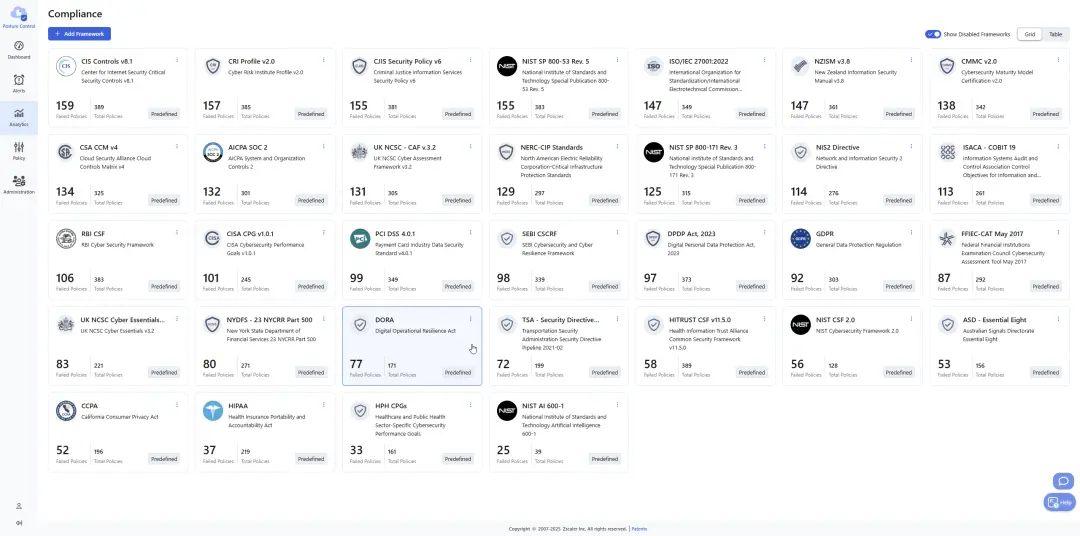
Fig 1: Compliance Framework Dashboard
Its ability to align with over 30 global frameworks—such as DORA, GDPR, NIS2, ISO 27001:2022, PCI, NIST, CSA CCM, CIS,HITRUST and more—reinforces trust and bolsters operational resilience. As shown in the Compliance Framework Dashboard, Zscaler DSPM maps and evaluates policies across multiple regulations, providing actionable insights to eliminate gaps and ensure adherence to international standards. By proactively maintaining alignment with evolving regulatory requirements, organizations can strengthen their digital operational resilience while reducing the complexity of compliance.
Breaking Down DORA: Why It Matters
Introduced by the European Union, DORA mandates that financial institutions—from banks to payment providers—must withstand disruptions, recover quickly from cyber incidents, and minimize operational downtime. It’s a bold initiative designed to address the growing threat of ICT system failures and cyberattacks. Here's how Zscaler DSPM helps financial institutions tackle DORA’s key requirements:
A Roadmap to Resilience: How Zscaler DSPM Aligns with DORA Chapters
1. Chapter II: ICT Risk Management—Turn Chaos Into Control
Managing ICT risks is at the heart of operational resilience, and DORA’s Chapter II lays down clear guidelines for doing so. Zscaler DSPM simplifies risk management by providing:
- Proactive Vulnerability Detection: Flag risks like exposed virtual machine disks or untrusted AI services accessing sensitive data.
- Automated Policies: Empower organizations to build ICT frameworks customized to their size and risk levels, utilizing automation to reduce the need for intricate manual management. DSPM connects the discovery of critical assets (such as credit card details, secret and access keys, PII, and more) with risk detection, providing precise risk assessments and compliance insights to enhance security and ensure regulatory adherence.
- Compliance Made Simple: Align seamlessly with DORA’s mandates while reducing stress on resources.
2. Chapter III: Incident Management, classification and reporting
Effective incident handling is key to combating disruptions. Zscaler DSPM enables financial institutions to act fast in the face of ICT incidents:
- Anomaly Detection: Monitor systems for irregular activities, such as data exfiltration or brute force.
- Real-Time Detection: Identify risks before they escalate and disrupt your operations. The Alerts Dashboard demonstrates how Zscaler DSPM categorizes these risks by severity—such as medium, high, or critical—and provides actionable insights to address vulnerabilities efficiently.
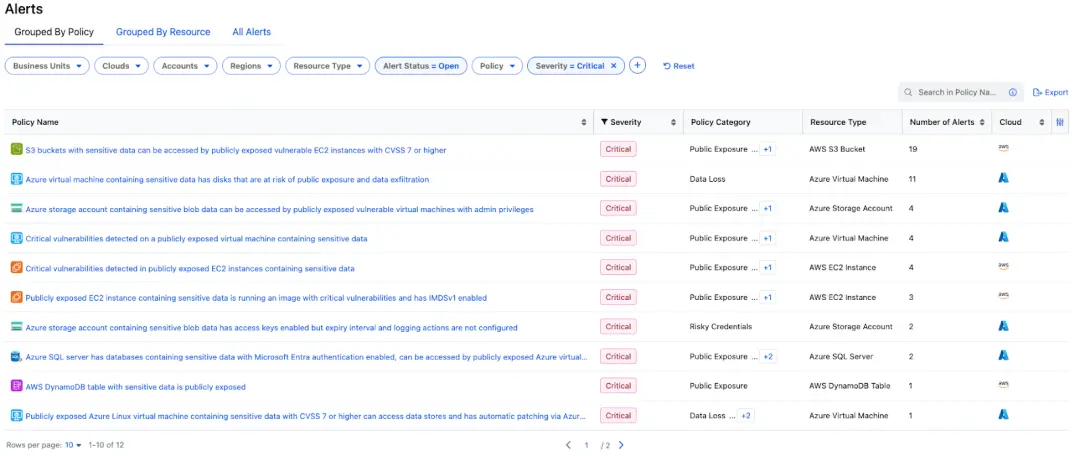
Fig 2: Alert Dashboard
- Comprehensive Reporting: Meet DORA’s strict requirements for classification and reporting of incidents with automated alerts and actionable steps.
3. Chapter IV: Digital Operational Resilience Testing—Build Confidence, Not Complications
How resilient are your systems? DORA’s Chapter IV introduces mandatory testing protocols to answer this crucial question. Zscaler DSPM helps organizations:
- Test Smarter: Conduct vulnerability scans
- Uncover Weaknesses: Identify risks in your systems and defenses proactively.
- Ensure Continuity: Maintain system availability and rapid incident response through stringent SLA adherence.
4. Chapter V: Managing ICT Third-Party Risks—Collaborate Safely, Operate Confidently
DORA emphasizes the importance of reducing risks introduced by third-party ICT service providers. Zscaler DSPM amplifies transparency across external dependencies:
- Comprehensive Inventory: Track packages, configurations, and data sources across cloud and on-premise environments to identify potential vulnerabilities.
- Minimize Third-Party Risks: Ensure strong governance and security, meeting DORA’s third-party requirements head-on.
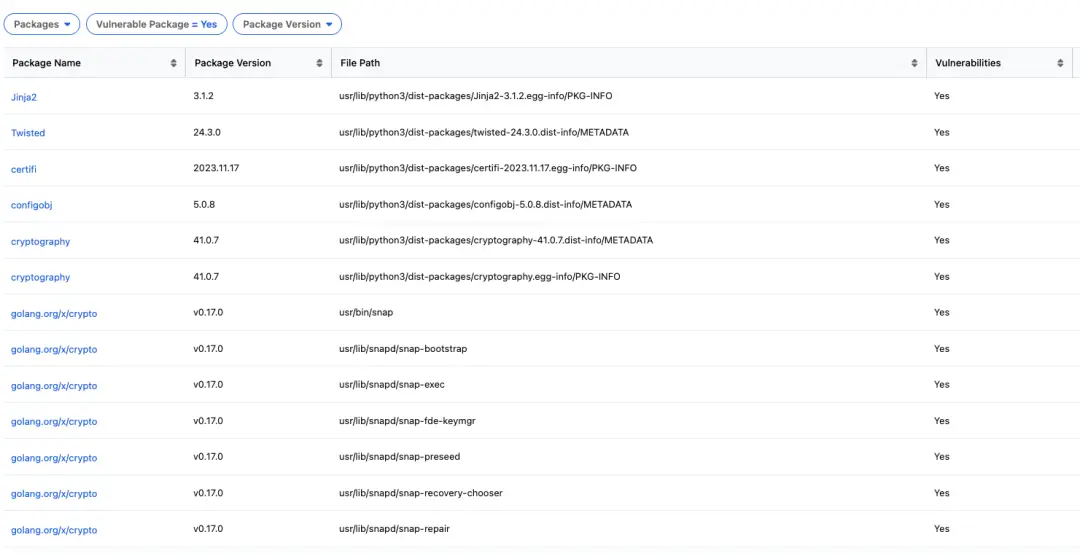
Fig 3: Vulnerability and Package Dashboard
5. Chapter VI: Information Sharing—Empowering Collective Defense
Threat intelligence sharing is critical to combat cyber risks, but it must be done responsibly. Zscaler DSPM enables financial entities to collaborate without compromising sensitive data:
- Data Classification: Zscaler DSPM identifies sensitive content across data sources—such as storage, databases, and AI Services—enabling organizations to ensure shared intelligence is appropriately classified and compliant with DORA regulations. The Data Discovery Dashboard illustrates this process, showcasing how triggers are identified and categorized across various regions and types of sensitive data, including PCI, HIPAA, and SSNs. By mapping files and triggers in real time, organizations can reduce exposure risks while maintaining operational confidence.
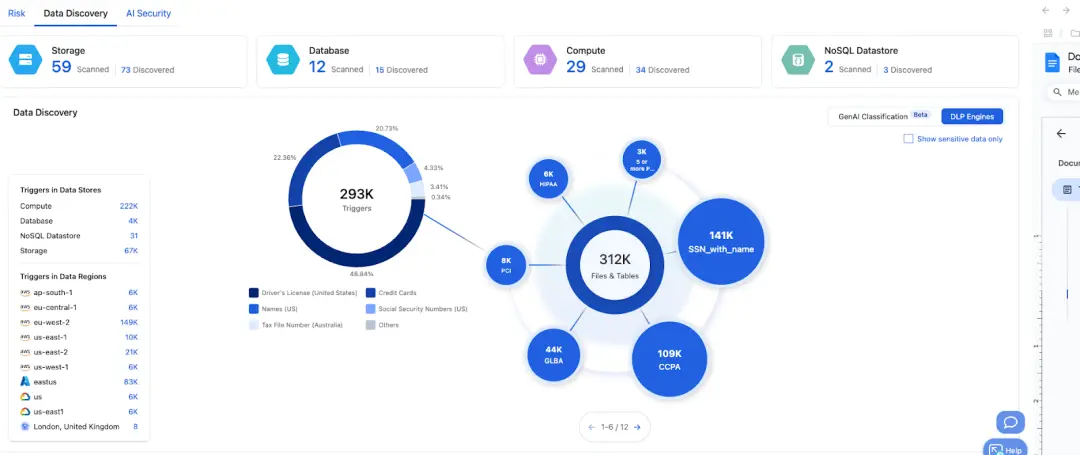
Fig 4: Data Discovery Dashboard
- Controlled AI Access: Prevent unauthorized platforms—such as AI models—services, and applications from accessing protected information, as illustrated in the below diagram. This visual showcases how Zscaler DSPM monitors sensitive data interactions and external dependencies, ensuring transparency without compromising security.
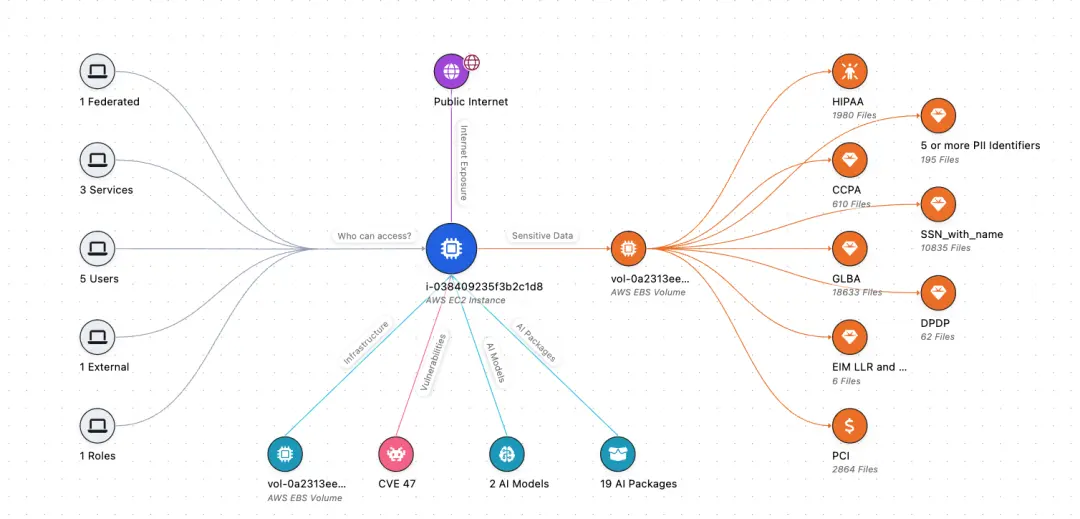
Fig 5: Access Control
- Regulatory Alignment: Share cyber threat intelligence securely, meeting DORA’s transparency and confidentiality requirements.
Future-Proof Your Financial Institution
As Europe’s financial landscape evolves under the influence of DORA, one thing is clear: resilience will define success. Zscaler DSPM plays a pivotal role in advancing operational stability, mitigating risks, and ensuring compliance with regulatory frameworks.
Let Zscaler DSPM help your organization achieve more than compliance—let it empower you to lead confidently in a world of growing digital complexity.
To learn more about Zscaler DSPM innovations - Launching Zscaler AI-SPM to secure cloud data and AI, watch the launch webinar.

이 게시물이 도움이 되었나요?


면책 조항: 이 블로그 게시물은 정보 제공만을 목적으로 Zscaler에서 작성하였으며, 정확성, 완전성 또는 신뢰성에 대한 어떠한 보증도 없이 "있는 그대로" 제공됩니다. Zscaler는 제공된 정보를 기반으로 수행된 조치나 오류 또는 누락에 대해 어떠한 책임도 지지 않습니다. 이 블로그 게시물에 링크된 제3자 웹사이트나 리소스는 편의를 위해서만 제공되며, Zscaler는 해당 웹사이트의 콘텐츠나 관행에 대해 책임을 지지 않습니다. 모든 콘텐츠는 예고 없이 변경될 수 있습니다. 이 블로그에 접속함으로써 귀하는 본 약관에 동의하며 귀하의 필요에 따라 정보를 확인하고 사용할 전적인 책임이 귀하에게 있음을 인정합니다.


