Zscaler 블로그
Zscaler 블로그의 최신 업데이트를 이메일로 받아보세요
Why Rethinking Legacy Network Architectures Is Key For Enterprises

Ransomware attacks increased by 37% in 2023, with the average enterprise paying ransom payments exceeding $100,000. The latest Zscaler ThreatLabz report discusses this in detail. This is just one example of cyberattacks that are plaguing institutions. These attacks happen due to large attack surfaces, compromising systems, moving laterally through the organization, and then exfiltrating the data.
Opportunities for Cybercriminals
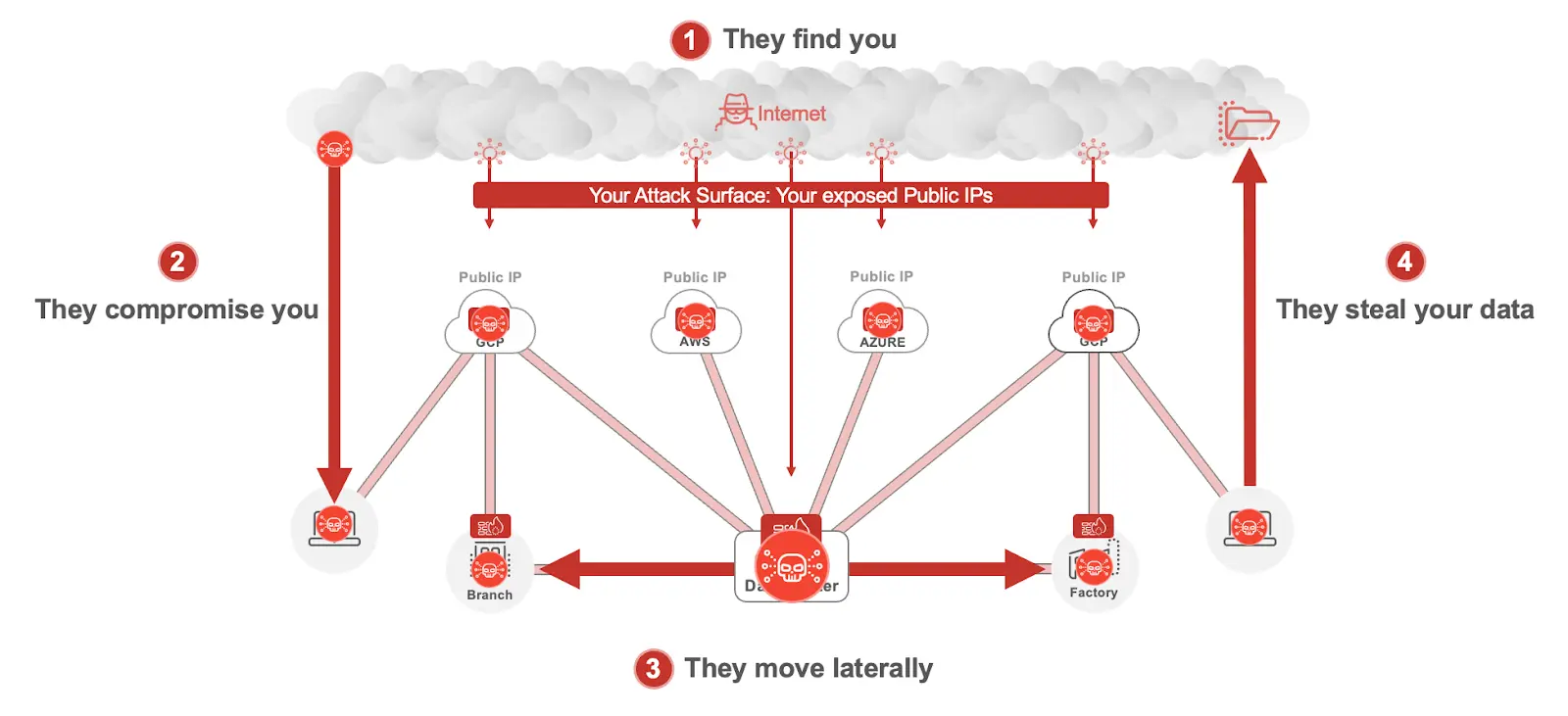
It's not that organizations aren't looking to prevent attacks from happening, it's that organizations need to rethink their network architecture, especially given the refactoring that has happened over the last couple of years. IT teams had to pivot as organizations went 100% remote and then shifted again as many organizations became hybrid, with employees coming into the office a couple of days a week.
These changes impact employees and how they work. Now, they expect great experiences from both their home environment and their in-office environment, but often fail to consider the security implications. Protecting the company's assets shouldn’t introduce complexity or impact end users. As organizations have dealt with these changes in strides, they have also continued investments in cloud resources to keep up with business demand. Workloads must also have seamless, secure connectivity across clouds, VPCs, and data centers. Keeping these workloads safe is essential as they are extensions of your data centers and applications.

The simple yet complex question is: "does it make sense to continue purchasing VPNs and firewalls, expanding unsecured WAN connectivity, and connecting cloud workloads without rethinking the current network architecture for the future?" When dissecting this question, thinking through all the challenges and potential approaches can be difficult. Here are some sample questions to consider:
- Are VPNs and firewalls required in all circumstances? Do they open up more of an attack surface, making it easier for threat actors?
- My WAN infrastructure connects users and devices to all applications, which works fine, but is it secure, and can I reduce costs (MPLS) since many people work from home?
- How can I ensure that my end users' performance is optimal with the hybrid workforce? Are they being backhauled with a VPN to a data center, and is that the most efficient way? Do we have the necessary monitoring tools to identify last-mile ISP and Wi-Fi issues?
- We are moving mission-critical workloads to the cloud, but securing them is challenging. The cloud has some security capabilities, but what are the best methods to educate our staff and move away from point solutions?

Looking back at the last few years, it's impressive how IT teams have kept the lights running with minimal staff. They've endured a lot, from their expanded roles to ensuring the business thrives. We can't anticipate what the future holds. However, if you architect it in a way that can solve many challenges through simplicity and lower costs, it's worth considering.
Take a few moments to download our ebook and dive deeper into future-proofing your network architecture.

이 게시물이 도움이 되었나요?


면책 조항: 이 블로그 게시물은 정보 제공만을 목적으로 Zscaler에서 작성하였으며, 정확성, 완전성 또는 신뢰성에 대한 어떠한 보증도 없이 "있는 그대로" 제공됩니다. Zscaler는 제공된 정보를 기반으로 수행된 조치나 오류 또는 누락에 대해 어떠한 책임도 지지 않습니다. 이 블로그 게시물에 링크된 제3자 웹사이트나 리소스는 편의를 위해서만 제공되며, Zscaler는 해당 웹사이트의 콘텐츠나 관행에 대해 책임을 지지 않습니다. 모든 콘텐츠는 예고 없이 변경될 수 있습니다. 이 블로그에 접속함으로써 귀하는 본 약관에 동의하며 귀하의 필요에 따라 정보를 확인하고 사용할 전적인 책임이 귀하에게 있음을 인정합니다.