
Logre la microsegmentación de cargas de trabajo en la nube



Proteja las aplicaciones de misión crítica
Obtenga una visibilidad clara de la actividad de las cargas de trabajo críticas, reduzca la superficie de ataque e implemente políticas de segmentación detalladas para las cargas de trabajo en la nube.
El problema
La microsegmentación es compleja en arquitecturas heredadas.
Muchas organizaciones dependen de enfoques de segmentación tradicionales para detener el movimiento lateral de las amenazas. Desafortunadamente, estas arquitecturas dependen de cortafuegos, VLAN o dispositivos diseñados específicamente para ese fin, que tienen problemas inherentes.

Complejidad
Resulta difícil aplicar políticas de segmentación sin visibilidad de las cargas de trabajo críticas.
Gastos generales operativos
La elaboración, el despliegue y el mantenimiento de políticas conllevan una importante carga operativa.
Costos elevados
Implementar una solución de microsegmentación específica es un proceso caro.
Descripción general de las soluciones
Una nueva arquitectura para la microsegmentación de cargas de trabajo en la nube híbrida
Zscaler Microsegmentation proporciona visibilidad granular, recomendaciones de grupo basadas en IA y aplicación local en una arquitectura simple basada en agentes.

Ventajas
Aísle y proteja las aplicaciones de alto riesgo con Zero Trust

Elimine el movimiento lateral
Reduzca la superficie de ataque con políticas precisas que brindan visibilidad y prevención de amenazas sin parangón.

Reduzca la complejidad
Amplíe la plataforma Zscaler para la microsegmentación, eliminando la necesidad de costosas soluciones puntuales.

Logre una segmentación inteligente
Utilice telemetría en tiempo real para definir instantáneamente políticas y acelerar la toma de decisiones de seguridad.
Casos de uso
Unifique visibilidad, políticas y protección
Obtenga visibilidad completa de los recursos
Obtenga un inventario completo y detallado de los activos, con una descripción general de todos los flujos de tráfico entre cargas de trabajo.

Optimice la gestión de políticas con reglas sugeridas por IA en tiempo real
Simplifique las operaciones con recomendaciones de políticas automatizadas basadas en información sobre el tráfico y la carga de trabajo en tiempo real. Aproveche las sugerencias de reglas asistidas por IA para garantizar una cobertura completa.

Elimine el movimiento lateral de las amenazas
Con la segmentación basada en host, cree automáticamente políticas de segmentación granulares para el tráfico a nivel de aplicación. Reduzca la superficie de ataque restringiendo el tráfico de este a oeste con principios zero trust.

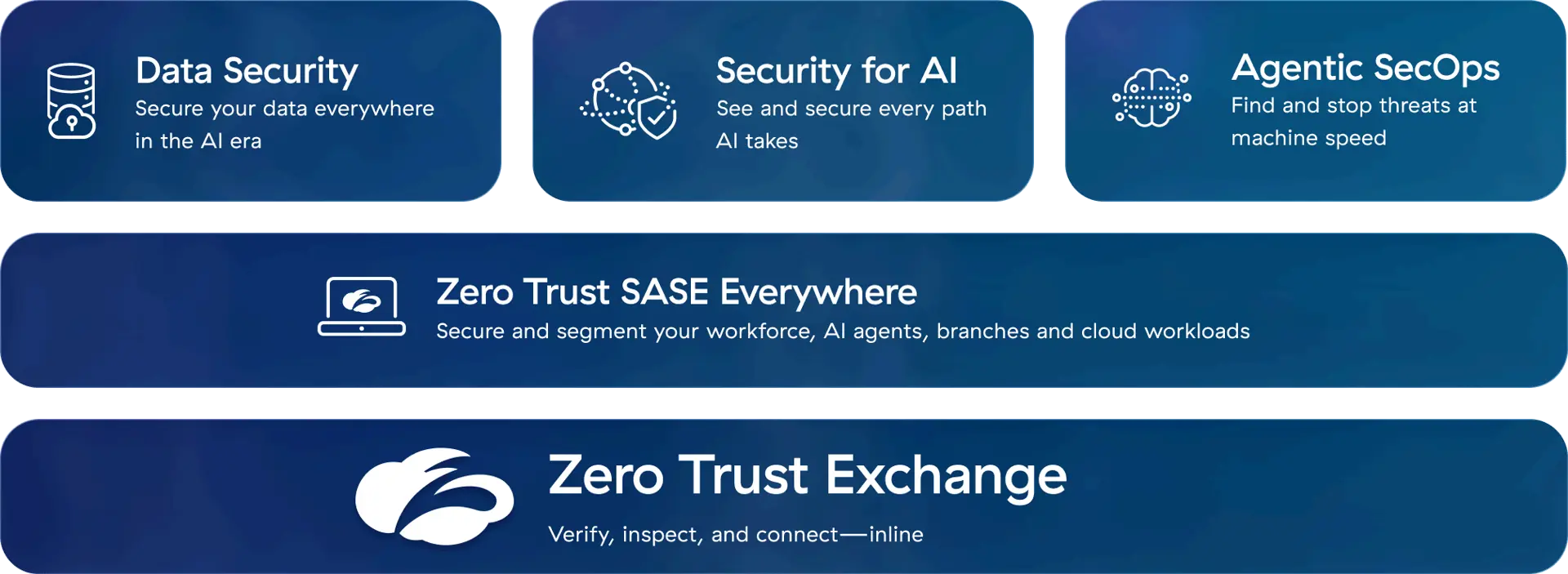
LA PLATAFORMA ZSCALER
La plataforma de ciberseguridad para la era de la IA, basada en Zero Trust, diseñada para proteger usuarios, cargas de trabajo, sucursales y dispositivos a través de la mayor nube de seguridad en línea del mundo.
Preguntas frecuentes
La segmentación de red es un medio para controlar el tráfico norte-sur (que entra y sale de una red). Los segmentos de red, que suelen estar formados por VLAN o cortafuegos, se basan en regiones geográficas o niveles de red existentes. La segmentación de red otorga confianza inherente a las entidades dentro de una zona determinada y, como tal, no es una estrategia zero trust. Obtenga más información.
La microsegmentación es una técnica de ciberseguridad que permite a las organizaciones gobernar mejor el acceso a la red entre recursos (por ejemplo, el tráfico de servidor a servidor/este-oeste). Al identificar de forma exclusiva cada recurso (por ejemplo, un servidor, una aplicación, un host, un usuario), su organización puede configurar permisos que proporcionen un control detallado del tráfico de datos. Combinada con un enfoque zero trust, la microsegmentación ayuda a prevenir el movimiento lateral de amenazas, el compromiso de la carga de trabajo y las filtraciones de datos.Más información.
La implementación de una solución de microsegmentación respalda el cumplimiento mediante zonas de seguridad granulares que aíslan sistemas, cargas de trabajo y datos confidenciales. Aplica controles de acceso detallados mediante políticas basadas en la identidad del usuario, la aplicación y el contexto, lo que reduce el movimiento lateral y la exposición. Limitar el acceso no autorizado responde a requisitos estrictos de regulaciones como RGPD, HIPAA y PCI DSS.