Zscaler 部落格
訂閱 Zscaler 部落格,第一時間獲取最新資訊!
Building a Unified Data Security Platform across DSPM and DLP

Data is more fluid than ever, dispersed across cloud apps, unmanaged devices, and generative AI. This sprawl has outpaced visibility, leaving security teams at a disadvantage as they manage escalating risks. Furthermore, the rapid rise of generative AI introduces new complexities as employees interact with sensitive information in increasingly unpredictable ways. This challenge is exacerbated by fragmented legacy solutions that offer isolated, single-channel point solutions rather than a holistic view of data exposure.
The Limitations of Legacy: Why Traditional Approaches Fall Short
This data sprawl has created visibility gaps that traditional perimeter-based security cannot keep up with. Most organizations today don’t have a single source of truth that enables security teams to see the full picture of data exposure across environments. Without a central view, it's nearly impossible to know:
- Data Residency: Where most sensitive data is actually stored
- Access Control: Who has access to it
- Exposure Risk: If the data is overexposed
- Vulnerability Management: If there are misconfigurations that are creating vulnerabilities
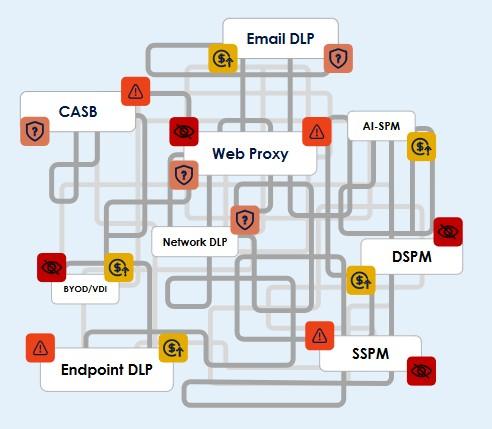
Traditional legacy systems, originally built for a static world, aren’t keeping pace with the environments they were supposed to protect. Many of the tools organizations have relied on—particularly legacy Data Loss Prevention (DLP)—are starting to feel more like stopgaps than solutions as they lack an intelligence layer to continuously map data, help understand the context surrounding it, and connect the dots between data, identity, and access.
Furthermore, legacy DLP tools struggle with scale and nuance. Rules are often too brittle, alerts are notoriously noisy, and enforcement lacks the situational context needed to be effective. This creates a lose-lose scenario: security teams either tune DLP so loosely that it fails to detect real-time risk and threats or so tightly that it disrupts legitimate business workflows and frustrates users. This operational friction, combined with the tightening grip of global regulations such as General Data Protection Regulation and the California Consumer Privacy Act , transforms compliance from a standard procedure into an administrative nightmare.
Closing the Gap with a Unified Approach: The DSPM and DLP Power Duo
To protect data effectively, organizations must bridge the divide between providing visibility by knowing where the data is and enforcement by controlling where it goes.
DSPM and DLP - It's easy to think of these two tools and include them in your security strategy.
Data Security Posture Management (DSPM) provides the clarity needed to identify hidden risks and overexposed data. DLP provides the control engine to prevent exfiltration, powered by precise data classification. In most cases, these two solutions are disjointed and siloed, resulting in increasing costs, operational burden and risk.
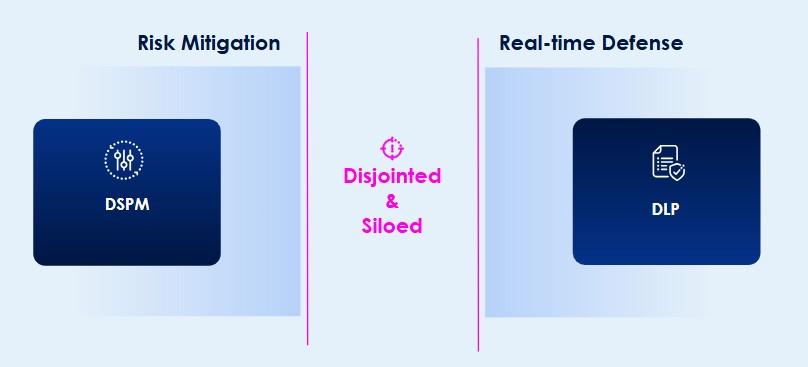
But, when these two solutions are connected, they create a continuous feedback loop. Visibility informs smarter enforcement policies, and enforcement actions provide deeper insights into data movement. The result is a unified security layer that is significantly more intelligent, scalable, and robust.
This unified approach eliminates the "visibility vacuum" created by siloed security tools. Integrating modern DLP, DSPM, and vulnerability management eliminates a patchwork of point solutions, which fail to keep pace with today’s complex environments where data moves freely.It simplifies one of the most complex and fragmented challenges organizations face:
- Locating their data
- Classifying it correctly
- Controlling who can access it
- Monitoring how people interact with it across all channels, such as endpoints, email, web, cloud, and AI tools.
Ready to Learn More?
To learn more about this unified approach to secure the modern environment, please register for our on demand webinar Building a Unified Data Security Platform across DSPM and DLP on March 5, 2026 in partnership with Frost & Sullivan. Our experts Shankar Subramaniam, VP, Product Management, DSPM from Zscaler and Ying Ting Neoh, Industry Analyst, Cybersecurity from Frost & Sullivan will share insights on how integrating DLP with DSPM creates a proactive, comprehensive, and unified defense for the AI era.
This blog post has been created by Zscaler for informational purposes only and is provided "as is" without any guarantees of accuracy, completeness or reliability. Zscaler assumes no responsibility for any errors or omissions or for any actions taken based on the information provided. Any third-party websites or resources linked in this blog post are provided for convenience only, and Zscaler is not responsible for their content or practices. All content is subject to change without notice. By accessing this blog, you agree to these terms and acknowledge your sole responsibility to verify and use the information as appropriate for your needs.


免責聲明:本部落格文章由 Zscaler 製作,僅供資訊參考,並以「現狀」提供,不保證其準確性、完整性或可靠性。Zscaler 對任何錯誤或遺漏,或基於所提供的資訊而採取的任何行動不承擔任何責任。本部落格文章中連結的任何第三方網站或資源僅為方便起見而提供,Zscaler 對其內容或做法概不負責。所有內容如有變更,恕不另行通知。存取此部落格,即表示您同意這些條款,並承認您有責任自行驗證並根據您的需求適當使用資訊。