Zscaler 部落格
訂閱 Zscaler 部落格,第一時間獲取最新資訊!
Zscaler Endpoint Context: Endpoint-to-Cloud Visibility and Enforcement for SecOps
For years, we have operated under the fundamental assumption that cyberattacks always involve malware. However, threat actors today are far more dynamic. Modern attackers are increasingly blending traditional malware with techniques like Living off the Land (LOTL) attacks—leveraging trusted, legitimate tools already present in the environment—to evade traditional defenses. This complex threat landscape overwhelms traditional security tools that lack deep endpoint and process-level visibility.
Focusing on a single vector— whether malware or LOTL— creates critical blind spots. Defending against both types of attacks requires comprehensive visibility across endpoints and cloud to deliver the full threat picture and enable effective response.
The Shifting Threat Landscape
Today's attackers aren't constrained by one playbook. They blend traditional malware —known and unknown—with legitimate system utilities such as PowerShell, Windows Management Instrumentation (WMI), and Remote Desktop Protocol (RDP). These techniques let them bypass signature-based detection and hide from tools that lack endpoint context.
Gartner underscores this critical shift:
"Network alerts can be confirmed or debunked by endpoint activity analysis."
— Guide to Endpoint Security Concepts, Eric Grenier, Gartner, May 2024
To detect these threats, SecOps need unified visibility across endpoint activity, sanctioned and unsanctioned applications, network flows, and the cloud .
Critically they must also detect when a compromised or risky application initiates traffic –something only endpoint-level intelligence can reveal.
The Rise of LOTL Attacks– and Why It’s Not the Whole Story
LOTL attacks leverage native, legitimate tools within a victim’s environment, leaving few obvious indicators. These threats are escalating rapidly—and when combined with sophisticated malware delivery, they become even harder to catch.
Take Scattered Spider: this group combined social engineering with native utility abuse to escalate privileges and bypass multi-factor authentication (MFA) in recent high-profile breaches—without deploying traditional malware.
Detecting sophisticated command-and-control (C2) frameworks like Cobalt Strike is even more complex. These tools blend into legitimate traffic, operate in memory, and are designed to avoid traditional defenses. Detecting and disrupting them requires deep visibility into endpoint behavior, cloud context, and the ability to act in real time.
That’s where a comprehensive visibility is needed—one that provides actionable context across endpoints and the cloud.
Introducing Zscaler Endpoint Context
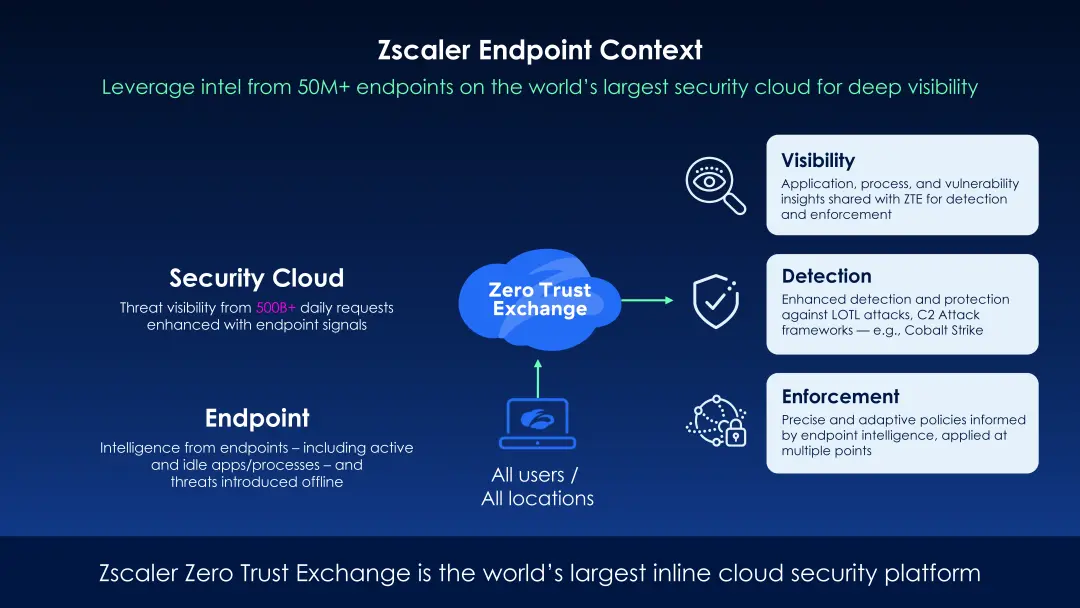
To address this critical visibility gap, we developed Zscaler Endpoint Context—a powerful enhancement to the Zscaler Zero Trust Exchange (ZTE). Endpoint Context provides unified visibility, detection, and dynamic policy enforcement across endpoints and the cloud.
Integrated into the lightweight Zscaler Client Connector (ZCC 4.8+), Endpoint Context offers comprehensive intelligence to SecOps teams and security analysts, delivering unmatched visibility and control.
Enhanced Multi-Layer Protection
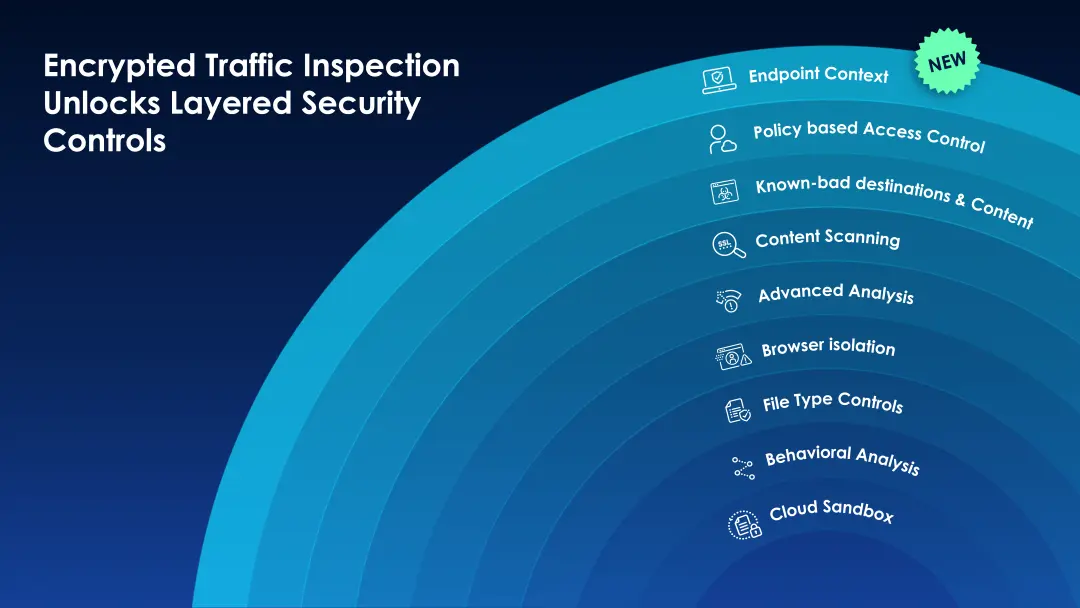
Endpoint Context significantly strengthens our existing multi-layered security model by adding critical real-time endpoint intelligence. This enables enhanced visibility, faster threat detection, and more precise policy enforcement across endpoint, cloud, and network interactions. A powerful differentiator is its ability to inspect traffic inline—including encrypted TLS traffic, enabling threat detection at scale while preserving productivity.
How Endpoint Context Empowers Security Teams
Endpoint Context delivers key advantages to SecOps teams, security analysts, and network professionals:
- Comprehensive Endpoint-to-Cloud Threat Intelligence:
Bridge visibility gaps between endpoint, cloud, and network, enabling quicker, more accurate threat detection and response. - Real-Time, Context-Rich Insights:
Rapidly detect file-based, LOTL, or offline threats introduced via USB, Bluetooth,or Airdrop leveraging deep insights into endpoint applications and behaviors for efficient investigation and rapid response. - Dynamic, Risk-Based Policy Enforcement:
Automatically apply adaptive policies informed by real-time endpoint and network intelligence to proactively mitigate threats before they escalate.
Real-World Use Cases Powered by Endpoint Intelligence
Early adopters of Zscaler Endpoint Context are leveraging its advanced capabilities to:
- Endpoint Application Visibility:
Quickly identify and manage risky or unauthorized applications, reducing potential attack vectors. - Endpoint Context as Policy Criteria:
Dynamically enforce security policies across Advanced Threat Protection (ATP), firewall, DNS, and SSL/TLS traffic based on real-time endpoint risk assessment. - Empower SecOps:
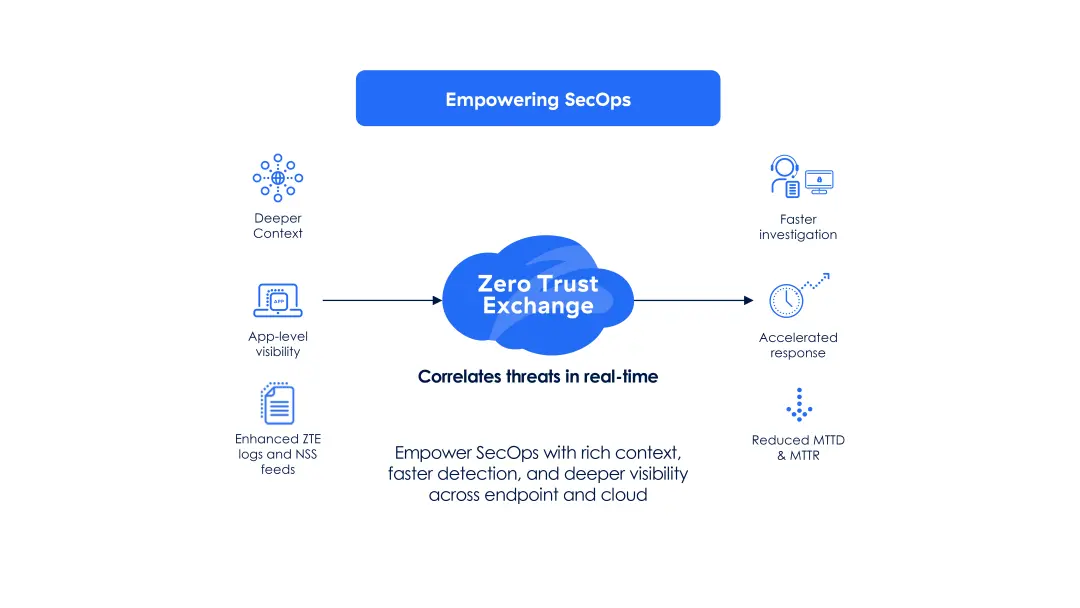
Improve Mean Time to Detect (MTTD) and Mean Time to Respond (MTTR) through enriched endpoint-to-cloud logging and actionable insights, empowering effective threat hunting and remediation. - Endpoint Sandbox:
Inspect and neutralize threats introduced offline (e.g., via USB, Bluetooth) before execution, proactively protecting endpoints. - JA4+ Fingerprinting for Unmanaged Devices:
Secure unmanaged devices (BYOD, IoT) by detecting threats within encrypted traffic, maintaining robust security while preserving user privacy.
Proven Efficacy Enhanced by Endpoint Context
Zscaler's Zero Trust Exchange (ZTE) processes over 500 billion transactions daily and has achieved 100% effectiveness in the CyberRatings SSE Threat Protection Test – two years running.
By tapping into insights from 50 million endpoints, Zscaler Endpoint Context enhances the Zero Trust Exchange (ZTE) platform capabilities —delivering unmatched visibility, inline detection, and dynamic policy enforcement for SecOps.
Stay Connected For More Updates
Stay tuned as we continue redefining SecOps with Endpoint Context—helping your team achieve full-spectrum visibility and control to stay ahead of modern threats, including advanced malware and LOTL attacks.


免責聲明:本部落格文章由 Zscaler 製作,僅供資訊參考,並以「現狀」提供,不保證其準確性、完整性或可靠性。Zscaler 對任何錯誤或遺漏,或基於所提供的資訊而採取的任何行動不承擔任何責任。本部落格文章中連結的任何第三方網站或資源僅為方便起見而提供,Zscaler 對其內容或做法概不負責。所有內容如有變更,恕不另行通知。存取此部落格,即表示您同意這些條款,並承認您有責任自行驗證並根據您的需求適當使用資訊。


