Zscaler 部落格
訂閱 Zscaler 部落格,第一時間獲取最新資訊!
AI in the Enterprise: Key Findings from the ThreatLabz 2025 AI Security Report
Artificial intelligence (AI) has rapidly shifted from buzz to business necessity over the past year—something Zscaler has seen firsthand while pioneering AI-powered solutions and tracking enterprise AI/ML activity in the world’s largest security cloud.
As enterprises embrace AI to boost productivity, accelerate decision-making, and automate workflows, to name a few benefits, cybercriminals are using the same technology to automate and scale more sophisticated attacks. From hyper-realistic deepfakes to advanced vishing scams, AI-generated threats have quickly raised the stakes for enterprise security.
With AI fundamentally changing both how businesses operate and how cybercriminals attack, organizations must maintain a current and comprehensive understanding of the enterprise AI landscape. The just-released ThreatLabz 2025 AI Security Report examines the intersection of enterprise AI usage and security, drawing insights from 536.5 billion AI/ML transactions in the Zscaler Zero Trust Exchange. The report reveals how enterprises worldwide and across industries are using and managing AI/ML tools, highlighting both their benefits and the security concerns that come with them. It examines the rising risks associated with AI, from cybercriminals weaponizing AI for more sophisticated attacks to the security implications of recent AI advancements like the open source model DeepSeek, while providing best practices for mitigating these risks.
This blog post summarizes several highlights from the report. For the full analysis and security guidance, download the ThreatLabz 2025 AI Security Report now.
5 key findings: AI usage and threat trends
The ThreatLabz research team analyzed activity from over 800 known AI/ML applications between February–December 2024. The following findings reveal notable trends—and concerns—surrounding AI usage:
- AI/ML usage surged exponentially: AI/ML transactions in the Zscaler cloud increased 36x (+3,464.6%) year-over-year, highlighting the explosive growth of enterprise AI adoption. The surge was fueled by ChatGPT, Microsoft Copilot, Grammarly, and other generative AI tools, which accounted for the majority of AI-related traffic from known applications.
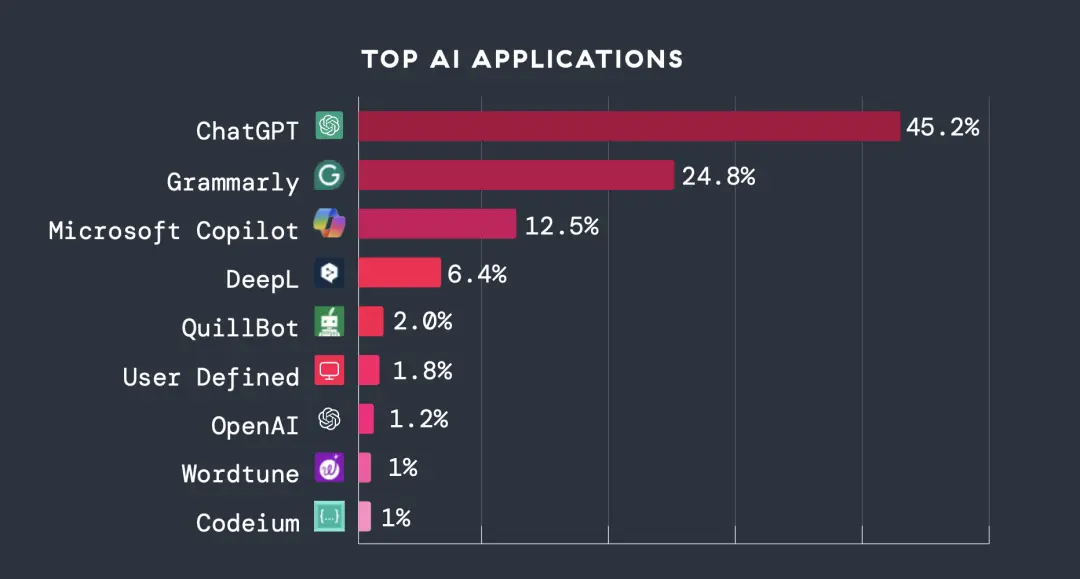
Figure 1: Top AI applications by transaction volume
- Enterprises blocked a large proportion of AI transactions: 59.9% of AI/ML transactions were blocked, signaling concerns over data security and the uncontrolled use of AI applications. As organizations work to establish AI governance frameworks, many are taking a cautious approach, restricting access to certain AI applications as they refine policies around data protection.
- U.S. and India drive the most AI/ML traffic: The United States and India recorded the highest volume of AI/ML transactions in the Zscaler cloud, reflecting strong enterprise adoption and a growing focus on AI-driven innovation. Other top contributors include the United Kingdom, Germany, and Japan, each exhibiting different levels of AI/ML activity, reflecting distinct approaches to balancing AI usage with security, compliance, and regional regulatory considerations.
- Finance & Insurance and Manufacturing dominate AI adoption: The Finance & Insurance (28.4%) and Manufacturing (21.6%) sectors generated the most AI/ML traffic. Following them, Technology, Healthcare, and Government are integrating AI at varying rates as they navigate the fine line between adoption and apprehension.
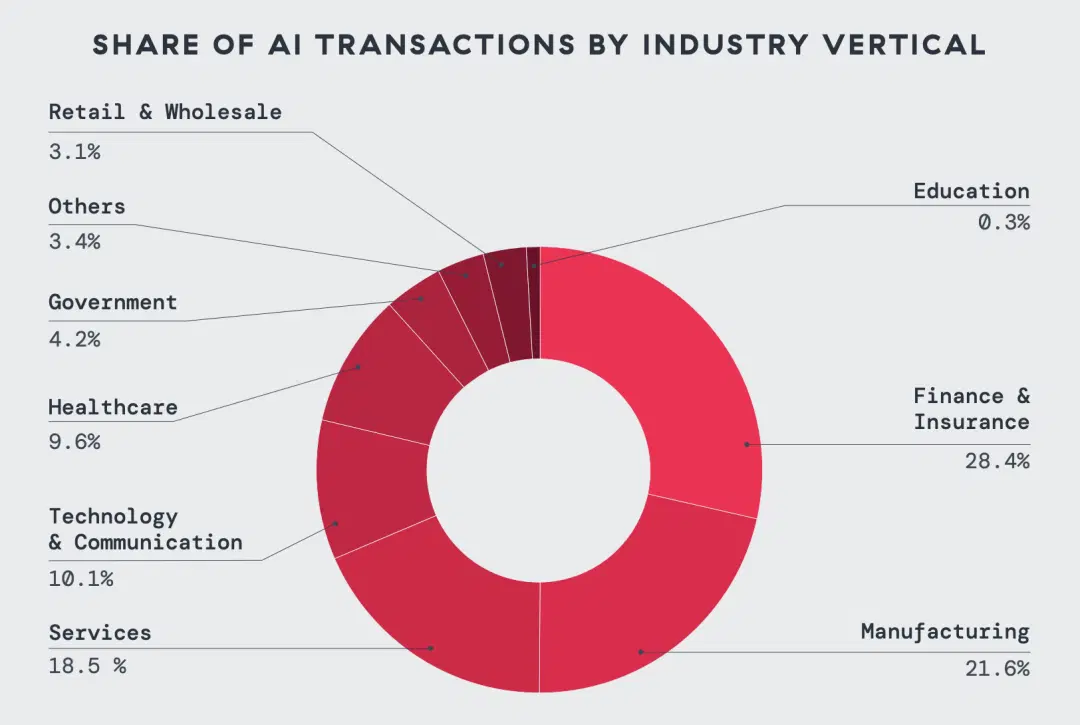
Figure 2: Industries driving the largest proportions of AI transactions
- AI-driven cyber risks are escalating: Threat actors are leveraging AI to enhance phishing campaigns, automated attacks, and create realistic deepfake content. ThreatLabz researchers demonstrated how DeepSeek can be manipulated to quickly generate phishing pages that mimic trusted brands. Additionally, ThreatLabz uncovered a malware campaign in which attackers created a fake AI platform to exploit interest in AI and trick victims into downloading malicious software.
Evolving AI risks in the enterprise
As our findings indicate, enterprises face a growing twofold challenge: (1) securing the inevitable and rapid adoption of AI/ML within their environments and (2) defending against increasingly sophisticated AI-enabled cyberthreats. Staying informed of the latest AI-driven security risks and their far-reaching business consequences is essential.
In the 2025 AI Security Report, ThreatLabz delves into evolving risks of AI, including:
- Shadow AI and data leakage: Key questions enterprises should consider to control unauthorized use of AI tools that may expose sensitive data.
- AI-generated phishing campaigns: A ThreatLabz case study demonstrates how DeepSeek can create a phishing page in just five prompts.
- AI-driven social engineering: An overview of the rising use of AI in social engineering, from deepfake videos to voice impersonation used to defraud enterprises.
- Malware campaigns exploiting interest in AI: ThreatLabz investigation into a malware campaign reveals how attackers lure victims with a fake AI platform to deliver the Rhadamanthys infostealer.
- The dangers of open source AI: How unrestricted models like DeepSeek introduce security risks, from accidental data exposure to data exfiltration.
- The rise of agentic AI: The challenges and risks associated with autonomous AI systems capable of executing tasks with minimal human oversight
As AI adoption continues to gain traction and becomes essential, enterprises must proactively shore up their security postures to safeguard AI/ML tools, enforce governance policies, and defend against AI-related threats.
Securing AI—and staving off AI threats—with AI
The ThreatLabz 2025 AI Security Report provides detailed guidance for enterprises looking to securely adopt AI while minimizing risks and stopping AI-powered cyberthreats.
At a high level, as organizations integrate more AI into their workflows, they must also rethink security strategies to account for new vulnerabilities, expanded attack surfaces, and AI-assisted attacks. Traditional security approaches reliant on firewalls and VPNs cannot keep up with the speed and sophistication of AI-powered threats. Enterprises must adopt zero trust as their foundation, eliminating implicit trust, enforcing least-privilege access, and continuously verifying all AI interactions.
Zscaler’s zero trust architecture delivers zero trust everywhere—securing user, workload, and IoT/OT communications—infused with comprehensive AI capabilities. Its AI models detect and disrupt advanced threats, blocking millions of attacks daily to enhance enterprise security outcomes and mitigate emerging risks.
The report details how to stop AI-powered threats with Zscaler, including these core security measures:
- Zero trust architecture: Reduce the attack surface by hiding applications and IP addresses from attackers and enforcing least-privilege access.
- AI-powered cyberthreat protection: Detect and block AI-generated phishing campaigns, adversarial exploits, and AI-driven malware in real time.
- AI-powered data classification and DLP: Use AI-driven classification to detect and protect sensitive data across Zscaler’s Data Fabric.
- AI-powered app segmentation: Stop lateral movement within networks, ensuring attackers cannot easily escalate privileges or access critical systems.
- AI-powered breach prediction: Preempt potential breach scenarios using generative AI and multi-dimensional predictive models.
- Real-time AI insights: Employ predictive and generative AI for actionable insights that enhance security operations and digital performance.
- AI visibility: Get in-depth visibility into AI application trends and interactions through interactive dashboards.
Beyond defending against AI-driven threats, enterprises must also ensure AI adoption is secure and controlled. Zscaler provides full visibility into GenAI usage, including app prompts and responses; isolates sensitive data; and enforces granular controls to prevent unauthorized access. With real-time monitoring, AI guardrails, and adaptive security controls, organizations can safely integrate AI tools without exposing critical data or increasing risk.
Get the report
As AI further transforms enterprise security, organizations must stay ahead of both AI adoption trends and the evolving threats that come with it. The ThreatLabz 2025 AI Security Report offers additional data-driven insights and analysis of AI’s impact on cybersecurity, with expert guidance to help enterprises securely embrace AI and mitigate its risks.
Download the full report for deeper knowledge on:
- Enterprise AI/ML adoption trends, including the top applications and categories
- Recent AI developments such as updates on the regulatory landscape
- AI predictions for 2025–2026 that enterprises should consider
- Best practices and strategies to securely adopt AI with zero trust


免責聲明:本部落格文章由 Zscaler 製作,僅供資訊參考,並以「現狀」提供,不保證其準確性、完整性或可靠性。Zscaler 對任何錯誤或遺漏,或基於所提供的資訊而採取的任何行動不承擔任何責任。本部落格文章中連結的任何第三方網站或資源僅為方便起見而提供,Zscaler 對其內容或做法概不負責。所有內容如有變更,恕不另行通知。存取此部落格,即表示您同意這些條款,並承認您有責任自行驗證並根據您的需求適當使用資訊。


