Zscaler Blog
Get the latest Zscaler blog updates in your inbox
The Governance Dead Zone: Why Your Private Apps Are the One Estate Nobody Audits
For a decade, Zero Trust Network Access (ZTNA) solutions have answered a deceptively simple policy configuration question: “Can this user access this application?” But ask a slightly different question, “Should this user be allowed to access this application?” and most ZTNA deployments go quiet. There is a gap between “possible to configure” and “how do you know what policy to configure and maintain it over time”
Walk into any large ZTNA customer deployment and you'll find a similar pattern: Overly permissive policies, each granting access that stays on until someone manually revokes it. It stays that way until someone remembers to go back and revoke it. Nobody does. Audits turn into spreadsheet archaeology. Security and IT teams can tell you that a policy exists; they often can't tell you who asked for it, who approved it, or whether it should still exist.
With Autonomous user to app segmentation ZPA made policy configuration more intelligent and automated. Global Enterprises rushed to adopt it because it was unique and solved a major “able to implement” gap. Today, we're updating the Zscaler Private Access framework to include “Govern,” making Zscaler the first ZTNA vendor to make app-owner-driven governance a native pillar of the framework. This framework enables granular, time-bound and project-bound policies for better app governance: Hide. Segment. Govern. Shield. Deceive.
Govern sits at the center of an architecture that controls connectivity and the defenses that block threats, because accountability for who should have access is the hinge that connects the two.
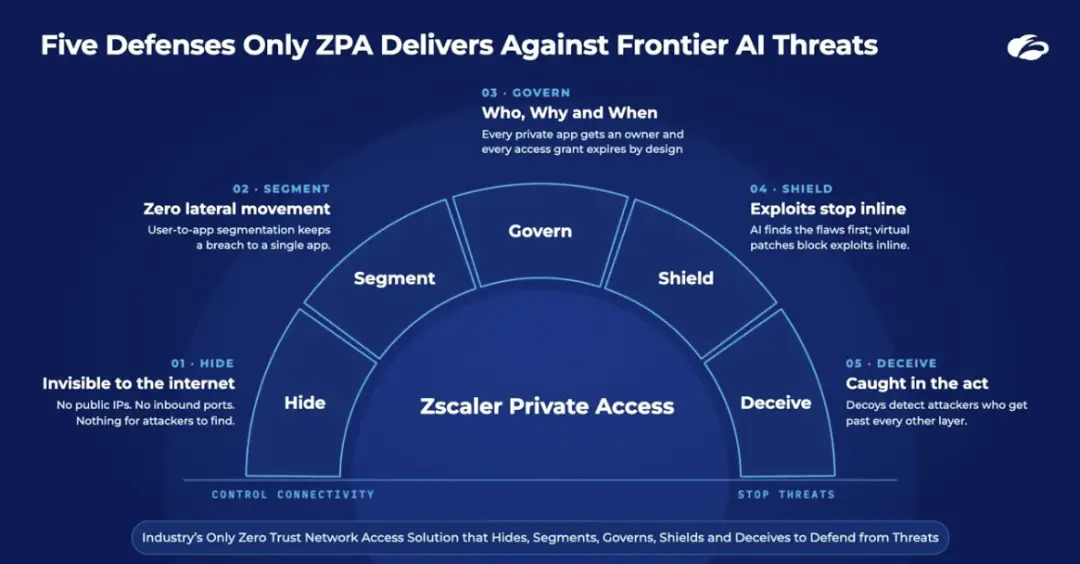
Image1: Five pillars of ZPA Zero Trust framework
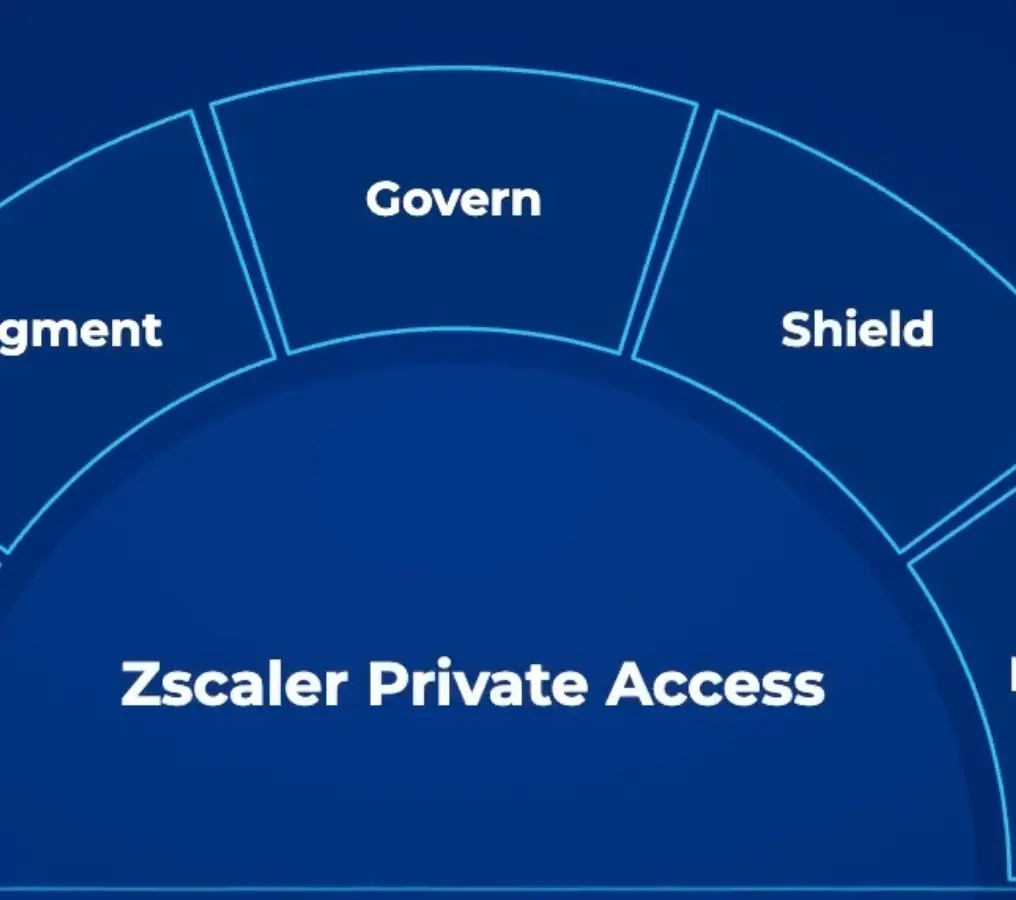
5 defenses against frontier AI threats with ZPA
The Driving Force Behind App Governance
Ask most admins "Who owns this application, and who's allowed to approve access to it?" and the honest answer is: nobody knows. Here are some of the challenges including,
1. Admins never equipped to make the call: A small team of admins is typically responsible for access decisions across an entire application estate. In reality, they do not know that a given app belongs to the finance team or that an HR system requires a second sign-on before anyone can access it. Without a way to push that decision to the person who actually owns the application, admins are left guessing. Guessing doesn't scale past a few hundred apps, let alone a few thousand.
2. Ownership remains the part nobody has solved: Even organizations that want to do this right hit the same wall: no admin, and no algorithm, can reliably say who owns a given application. AI can infer a guess from naming conventions or usage patterns, but a guess isn't an audit trail. Without an intelligent workflow that actually surfaces the right owner, access can't be delegated to the business, it defaults back to the team least equipped to decide.
3. Third-party access: Vendors, contractors, and partners are routinely granted access to internal applications for a project or a support contract, and that access rarely has a named owner or an end date. In fact, breaches due to such access doubled year over year, from 15% to roughly 30% of all confirmed breaches, according to the most recent Verizon Data Breach Investigations Report.
4. Manual operations to governance: So some organizations follow the approach of deny by default, grant on request. In theory, it looks like the fix. In practice, it creates a different failure. Users hit a wall with no idea which policy is blocking them and no clear way to ask for access. They open a ticket. They escalate. They ask a colleague to share credentials. Multiply that friction across thousands of users, and the "secure by default" collapses under its own policies
Today's access governance tools weren't built for this problem
Current solutions assume the application is already known, already inventoried, already defined, with permissions someone configured manually. They have no visibility into what's actually running inside the network, so governance only works if developers remember to tell security teams what they deployed and follow policy when they do. They often don't. The result is a widening gap between what's actually accessible and what's actually tracked in the textbook definition of shadow IT.
The industry has governance tools for two tiers of enterprise applications:
- SaaS and birthright apps, which are governed by Identity Governance and Administration (IGA) platforms (SailPoint, Saviynt, Microsoft Entra ID Governance, Okta, Omada) through the joiner/mover/leaver lifecycle.
- Privileged sessions (admin credentials, vaulted secrets, RDP/SSH to critical infrastructure), which are governed by PAM tools (BeyondTrust, Delinea).
Between those two tiers sits a governance dead zone: the long tail of private, internally hosted applications behind ZTNA. They are too routine for privileged access management tools, yet far too custom and privately hosted to be visible to standard SaaS-centric identity governance connectors. Those applications make up the bulk of a typical ZTNA deployment, and until now, they have had no native governance at all.
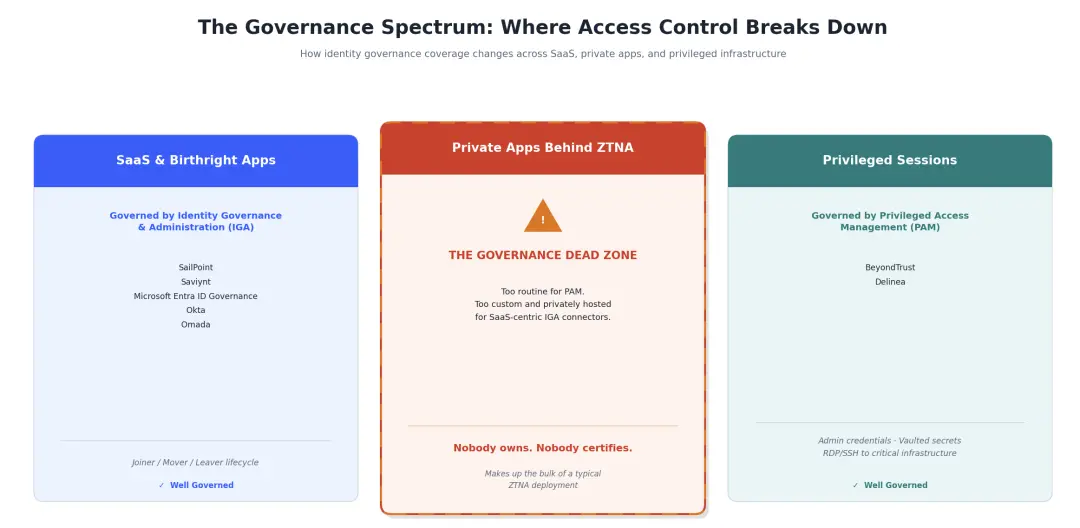
Image 2: The Governance dead zone that current solutions fail to address
That's why Governance is such a powerful and critical component of a ZTNA strategy. Segmentation and shielding can limit the blast radius of a breach. Deception can detect lateral movement. But Governance is essential to address this need “Was this user supposed to possess access to begin with?”.
Zscaler is uniquely positioned to answer that question across the full access landscape, because governance, segmentation, and privileged access all run through the same enforcement point: ZPA. SGA extends native governance to private apps, alongside Saviynt’s IGA for SaaS apps, and PRA for privileged infrastructure, giving Zscaler a governance story that spans all three tiers, not three disconnected tools.
Introducing Zscaler Security Governance & Access (SGA)
We're extending ZPA with Security Governance & Access (SGA), a governance layer that turns application segmentation from a static network boundary into a managed, accountable entitlement.
With SGA, every application segment ZPA creates becomes an object that someone owns, and every access grant becomes a workflow, not a static rule. This governance, built natively into ZPA, provides four core capabilities:
1. Resource Ownership
Any application segment can be mapped to a resource owner - an internal team lead, a director, a plant operator on a manufacturing floor or even a third party, as long as that individual is provisioned in the customer's Identity Provider. SGA decouples resource ownership from platform administration. A finance director can own access approvals for a finance app. A partner's PMO can own access approvals for a shared staging environment, without either needing ZPA admin credentials, console access, or security clearance to touch the fabric itself.
The ZPA admin team never again becomes the bottleneck for every access decision. Approval authority goes to the people who know whether access is appropriate.
2. Entitlement Workflows Per Resource
Resource owners decide how access to their apps is granted. Options include birthright provisioning on join, auto-approval under defined conditions, or manual approval requiring a human sign-off. This mirrors the request-and-approve patterns IGA tools use for SaaS, now applied natively to private apps. For example: the Finance app grants read-only automatically to anyone in the Finance org; admin access requires the resource owner's manual approval.
3. Just-in-Time Access by Default
Instead of a static access policy that persists indefinitely once written, SGA grants access that is scheduled, time-bound, or request-triggered. Access expires by design, not by someone remembering. This is the foundational capability of SGA, and it's what makes governance enforceable rather than aspirational.
4. Cross-Organizational Approval Chains
A common enterprise need - a systems integrator's engineer needs access to an application in the customer's environment. SGA lets the customer hold approval authority, even though the integrator's employee is the one requesting access. Ownership and approval don't have to sit inside the same company that's requesting access. The audit trail captures both the integrator’s request and the customer's approval - a single compliance record spanning both organizations.
How SGA Works Within ZPA
SGA is natively built-in to ZPA and therefore no upgrade, no App connector redeploy is required.
Customers can deploy in weeks, not the 7–9 months typical of IGA rollouts. All configurations including ownership mapping, entitlement rules, and approval workflows happen in the ZPA administrative plane, and access decisions are still enforced at the broker, exactly where ZPA already enforces them today.
What does change is how entitlement gets created. With SGA, once an owner defines a workflow, the entitlement is generated automatically as a byproduct of the approval process. This seamless scalability allows ZPA to efficiently manage thousands of applications and users across extensive enterprise deployments.
Govern extends User-to-App segmentation in the framework. The granular segmentation provided by Zscaler's Autonomous User-to-App Segmentation empowers SGA to precisely govern access to each application. The two capabilities compound: better segmentation feeds better governance. A capability we're actively building, turning segmentation output into entitlement proposals the app owner can review and accept.

Approver demo for Governance Control
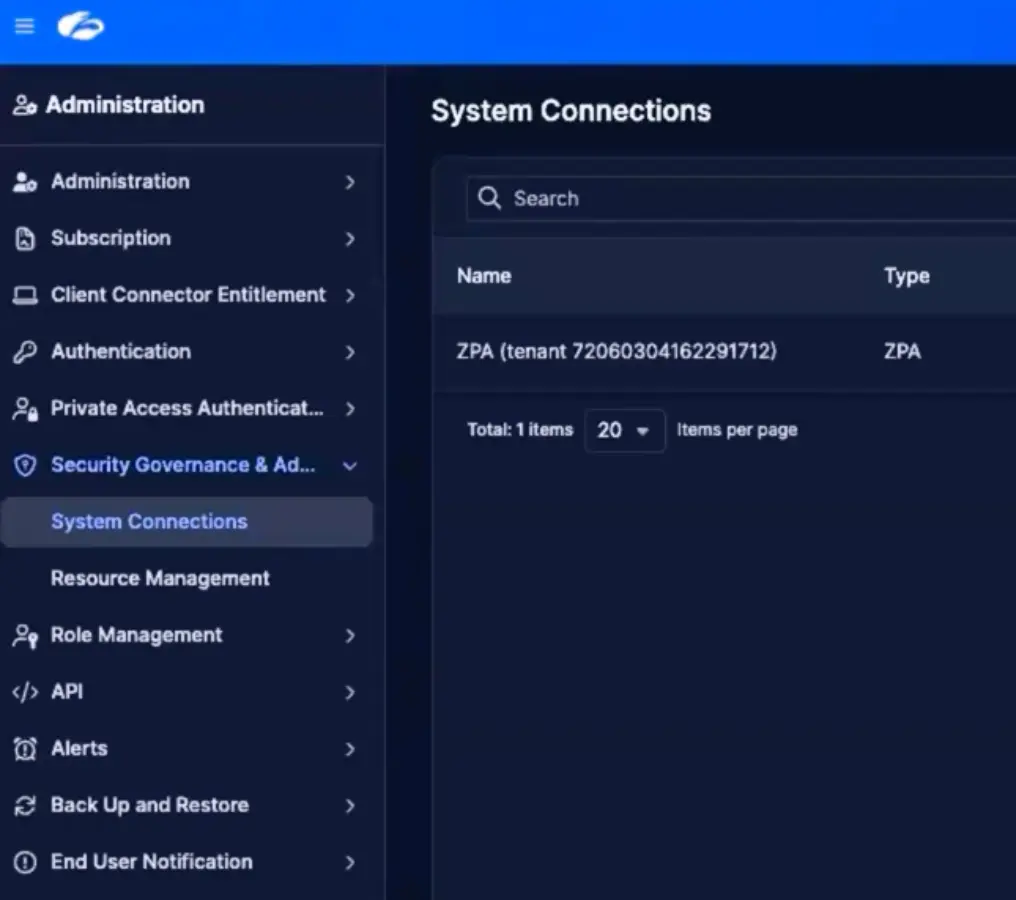
Admin Demo for Governance
Governing the Next Wave: AI Agents and Non-Human Identities
The governance gap we've described so far applies to human users. The next version of the problem is larger and faster.
Machine identities already outnumber human identities by more than 80 to 1 in most enterprises. AI and ML traffic across enterprise environments grew 91% year over year, spanning more than 3,400 applications, according to the Zscaler ThreatLabz 2026 AI Security Report.
Also, Gartner predicts that by 2028, 25% of enterprise breaches will be traced back to AI agent abuse. These agents query databases, call APIs, trigger workflows, move data across systems, and spawn sub-agents, all at machine speed, often carrying credentials that are broadly permissioned and rarely reviewed.
The same governance question applies: should this agent still have access to this application?
SGA's architectural model is inherently suited for this. Every capability it provides for human users (ownership, entitlement workflows, time-bound access, audit trails) applies equally to any identity that accesses a private application through ZPA, including service accounts and, as our platform evolves, AI agents. In fact, the case for governance is stronger for non-human identities than for humans, because agents don't submit help desk tickets when access expires. They fail silently or find alternative paths, which makes expiration-by-default and owner-attributed access even more critical.
Zscaler is investing broadly in this space. AI Protect, announced at Zenith Live 2026, delivers an enterprise agent registry, AI Access Graph (powered by our acquisition of Symmetry Systems), and inline guardrails for agentic workloads. Our partnership with Oasis Security extends non-human identity discovery and lifecycle governance across cloud, SaaS, and on-premises systems, connecting it to the enforcement layer that ZPA provides.
SGA's role in this broader architecture is specific: it governs what an identity (human or non-human) can access within the private application estate, and ensures that access is owned, scoped, and time-bound. The discovery, risk-scoring, and lifecycle management of non-human identities themselves is where our AI Protect platform and ecosystem partners operate. Together, they provide a governance model that covers the full identity spectrum, from the contractor who logs in once a quarter to the AI agent that calls an internal API a thousand times a day.
The IGA Opportunity: Extending Governance into Private Apps
The Identity Governance and Administration market is projected to exceed $10 billion in 2026. SailPoint, Saviynt, Microsoft Entra ID Governance, Okta Identity Governance, and Omada have each built deep connector ecosystems for governing access to SaaS applications, cloud infrastructure, and ERP systems. Their platforms automate provisioning, enforce separation of duties, run certification campaigns, and maintain the audit trails that SOX, HIPAA, and PCI DSS require.
What those platforms have not been able to reach is the estate of private, internally hosted applications that sit behind a ZTNA broker. The reason is architectural. IGA tools govern applications they can see as discrete objects with defined entitlements. Most IGA platforms treat ZPA policies as network rules, not entitlement objects, which means they can't be discovered, requested, approved, or certified through standard IGA lifecycle workflows.
SGA changes that. Zscaler has current API integrations with IGA platforms such as SailPoint and Saviynt and is working on growing these integrations to more vendors that allows these tools to extend governance to private applications.
Here's how the combination works in practice:
What the IGA Platform Does Today: treats ZTNA policies as opaque network rules (if it integrates at all) | What SGA Provides Today: ships natively inside ZPA, no integration required | What the Combination Delivers Together: ZTNA policies become first-class entitlement objects the IGA platform can discover, request, and certify |
|---|---|---|
Manages the identity lifecycle (join, move, leave) | Maps each private app segment to a governable entitlement | New hires inherit the right private-app access on day one; leavers lose it the day they leave |
Runs access certification campaigns | Exposes per-app ownership and approval metadata for review | One certification campaign covers SaaS, cloud, and private apps in a single reviewer queue |
Automates provisioning and deprovisioning | Enforces time-bound, workflow-driven grants at the ZPA broker | IGA requests a grant; SGA provisions it in seconds and auto-revokes when the clock runs out |
Enforces separation of duties | Provides individual-application granularity (not subnet-level wildcards) | SoD rules finally apply to the private app estate, not just SaaS |
Maintains audit trails for compliance | Records every request, approval, and expiration decision | A single evidence stream for SOX, HIPAA, PCI DSS — no spreadsheet reconciliation across systems |
For an enterprise running SailPoint or Saviynt alongside ZPA, the integration means that the same certification campaign governing access to Salesforce and Workday can now also cover the internally hosted finance application, the partner staging environment, and the legacy ERP system, all through the same governance console. For enterprises that don't yet run an IGA platform, SGA provides the governance fundamentals natively inside ZPA, so they can start governing private app access immediately and integrate an IGA tool later when their program matures.
The point is that SGA and IGA are complementary, not competitive. IGA platforms bring deep identity lifecycle management. SGA brings the private application surface they've never been able to reach.
An Open Invitation: Build With Us
SGA is an essential function to protect private applications and requires an ecosystem.
We are opening SGA's integration architecture to identity and governance partners. If you build an IGA platform, a PAM tool, an ITSM workflow engine, or any system that makes access decisions based on identity lifecycle events, we want to work with you to extend that decision-making into the private application estate that ZPA protects.
The integration model is built on standard entitlement objects and workflow APIs. Each ZPA application segment, once SGA is enabled, becomes an entitlement that external platforms can discover, request, and govern through their existing lifecycle processes. We're designing for partners who want to give their customers a unified governance view across SaaS, cloud, and private applications, all without requiring those customers to manage a separate tool for each tier.
We are actively inviting:
- IGA vendors (SailPoint, Saviynt, ConductorOne, Omada, Okta, Microsoft, and others) build connectors that bring ZPA-governed applications into their certification and lifecycle workflows.
- PAM vendors to extend privileged governance into the broader application estate that sits alongside (and often adjacent to) the sessions they already manage.
- ITSM and workflow platforms to integrate SGA's approval chains with their existing request management processes.
- Systems integrators and MSSPs to help joint customers design governance programs that span SaaS, privileged, and private application tiers in a unified model.
If you're interested in partnering, reach out to our team or contact your Zscaler partner representative.
Why This Must Be Native
A fair question: why build governance into the ZTNA platform instead of relying entirely on external IGA tools?
Because the private application estate has characteristics that external tools struggle to address on their own. Private apps behind ZPA don't expose standard SCIM or SAML entitlement endpoints the way SaaS applications do. Their access is defined at the network segment layer, not the application layer. And the organizations deploying them may not have an IGA platform in place at all, particularly mid-market enterprises that have adopted ZPA for secure access but haven't yet invested in a full identity governance program.
SGA solves for both scenarios. For enterprises with mature IGA programs, it provides the integration surface those programs need. For enterprises without one, it provides the governance fundamentals (ownership, workflows, JIT, audit trail) natively. Either way, the private application estate stops being a governance exception.
The Evolved Five-Pillar Framework
The ZPA framework now reads: Hide. Segment. Govern. Shield. Deceive.
Hide makes applications invisible to the internet. Segment isolates them so a breach in one place doesn't cascade. Govern ensures that access is owned, approved, time-bound, and auditable. Shield protects applications from exploitation. Deceive catches attackers who make it past every other layer.
Govern sits in the center of the framework because it connects the architecture that controls connectivity with the defenses that detect and stop threats. Without governance, the two halves of the framework operate independently. With it, they share a common answer to the question every auditor, every CISO, and every board eventually asks: who has access, and should they?
Zscaler Private Access with Security Governance & Access is now available in preview. To learn more about bringing governance to your private application estate, contact us or speak with your Zscaler account team. Identity and governance partners interested in building on SGA can reach our technology alliances team.

Was this post useful?


Disclaimer: This blog post has been created by Zscaler for informational purposes only and is provided "as is" without any guarantees of accuracy, completeness or reliability. Zscaler assumes no responsibility for any errors or omissions or for any actions taken based on the information provided. Any third-party websites or resources linked in this blog post are provided for convenience only, and Zscaler is not responsible for their content or practices. All content is subject to change without notice. By accessing this blog, you agree to these terms and acknowledge your sole responsibility to verify and use the information as appropriate for your needs.



Get the latest Zscaler blog updates in your inbox

By submitting the form, you are agreeing to our privacy policy.