
Sécuriser le trafic est-ouest entre workloads sans recourir à des pare-feu



Connectez en toute sécurité les workloads sur plusieurs clouds, régions et VPC/VNET
Autorisez les workloads cloud à communiquer en toute sécurité avec des workloads situés dans d’autres régions cloud, dans des infrastructures de cloud public ou dans des VPC/VNET, sans recourir à un routage cloud complexe et spécifique.

Prévenir les attaques de ransomware

Arrêter le déplacement latéral des menaces

Segmenter les applications à haut risque
Problème
Les pare-feu ne protègent pas vos workloads sur plusieurs clouds
Les VPN et les pare-feu s’appuient souvent sur des règles et des politiques rigides et complexes pour segmenter les workloads. Leur nature statique facilite le déplacement latéral des menaces et les accès non autorisés, augmentant la surface d’attaque et entraînant les problèmes suivants :

Politiques de pare-feu complexes et difficiles à administrer

Problèmes de chevauchement d’adresses IP dans les VPC/VNET

Exposition accrue aux risques sur l’environnement
Vue d’ensemble de la solution
Simplifiez et sécurisez la connectivité entre workloads avec Zscaler Zero Trust Cloud. Les applications modernes sont de plus en plus conçues sous forme de microservices distribués, déployés dans des environnements VPC/VNET. Une connectivité sécurisée entre ces workloads nécessite une architecture Zero Trust cloud native.

Appliquez des contrôles granulaires sur le trafic des workloads en les segmentant entre plusieurs clouds et régions. Zero Trust Cloud applique le principe du moindre privilège à chaque workload à l’aide de balises définies par l’utilisateur, garantissant une segmentation précise et sécurisée dans l’ensemble de l’environnement distribué.

Avantages
Assurer la sécurité et la segmentation des workloads sans la complexité inhérente

Connecter les applications, pas les réseaux
Connectez vos workloads en toute sécurité sans avoir à reconfigurer vos réseaux.

Neutraliser les attaques de ransomware
Minimisez la surface d’attaque et éliminez le déplacement latéral des menaces.

Segmenter les workloads sur les clouds/régions
Appliquez l’accès sur la base du moindre privilège aux workloads en fonction des besoins de l’entreprise.
Cas d’utilisation
Simplifiez la sécurité des workloads multicloud

Transférez en toute confiance les applications stratégiques des environnements sur site vers le cloud (migration « Lift and Shift »).

Assurez une connectivité sécurisée et transparente des workloads au sein d’un même cloud et entre plusieurs clouds.

Répondez en toute transparence aux exigences réglementaires de segmentation, que le RGPD, la loi HIPAA, la norme PCI DSS, etc.

Vous souhaitez tester Zero Trust Cloud dans une entité AWS ?
La plate-forme Zscaler
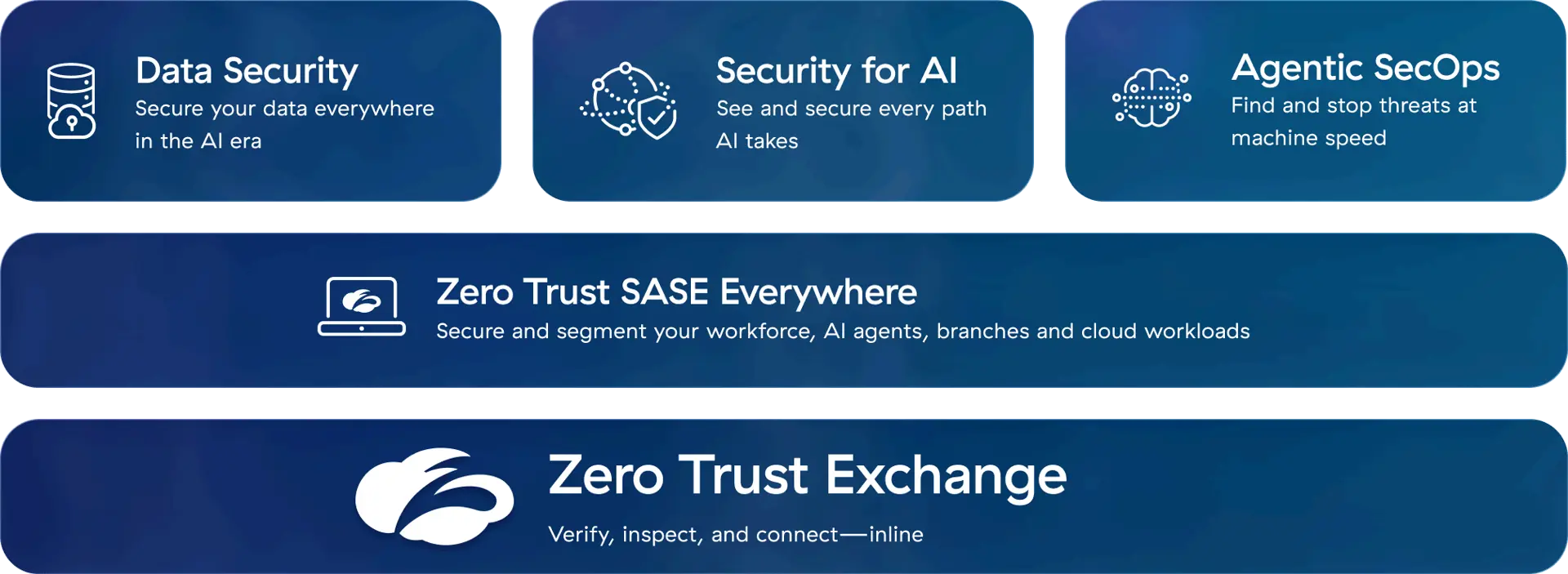
La plateforme de cybersécurité adaptée à l’ère de l’IA, bâtie sur le Zero Trust pour protéger les utilisateurs, les workloads, les sites distants et les appareils grâce au plus grand cloud de sécurité inline au monde.
Témoignages de réussite de nos clients


FICO étend le Zero Trust aux workloads de production dans le cloud


Micron sécurise les workloads dans les environnements de cloud hybride


NOV réduit ses dépenses tout en sécurisant les workloads dans le monde entier



FAQ
On parle de trafic est-ouest entre workloads lorsque des workloads d’entreprise communiquent entre eux au sein d’un même cloud ou entre plusieurs clouds, régions ou zones de disponibilité. Les workloads sont souvent déployés dans plusieurs VPC ou VNet au sein d’une même région, ce qui nécessite de sécuriser ces communications. Les architectures traditionnelles reposant sur des pare-feu et des VPN se révèlent inefficaces pour sécuriser ce type de trafic et exposent les entreprises à des risques importants.
Les architectures héritées basées sur des pare-feu et des VPN élargissent la surface d’attaque et facilitent le déplacement latéral des menaces. De plus, ces solutions sont souvent difficiles à administrer et coûteuses à maintenir. Par conséquent, les entreprises deviennent plus vulnérables aux attaques de ransomware et rencontrent fréquemment des problèmes tels que des conflits d’adresses IP.
Une architecture Zero Trust segmente et sécurise le trafic est-ouest en appliquant le principe du moindre privilège à chaque workload. En supprimant toute confiance implicite, elle empêche les déplacements latéraux de menaces comme les ransomware. Le Zero Trust vous permet d’appliquer des politiques granulaires fondées sur des balises pour protéger les workloads dans des environnements multicloud, et réduire la surface d’attaque de votre entreprise.