
Comprehensive Endpoint-to-Cloud Threat Visibility, Detection, and Control
Achieve end-to-end visibility, inline threat detection, and adaptive risk-based policy enforcement.



Endpoint-to-Cloud Context
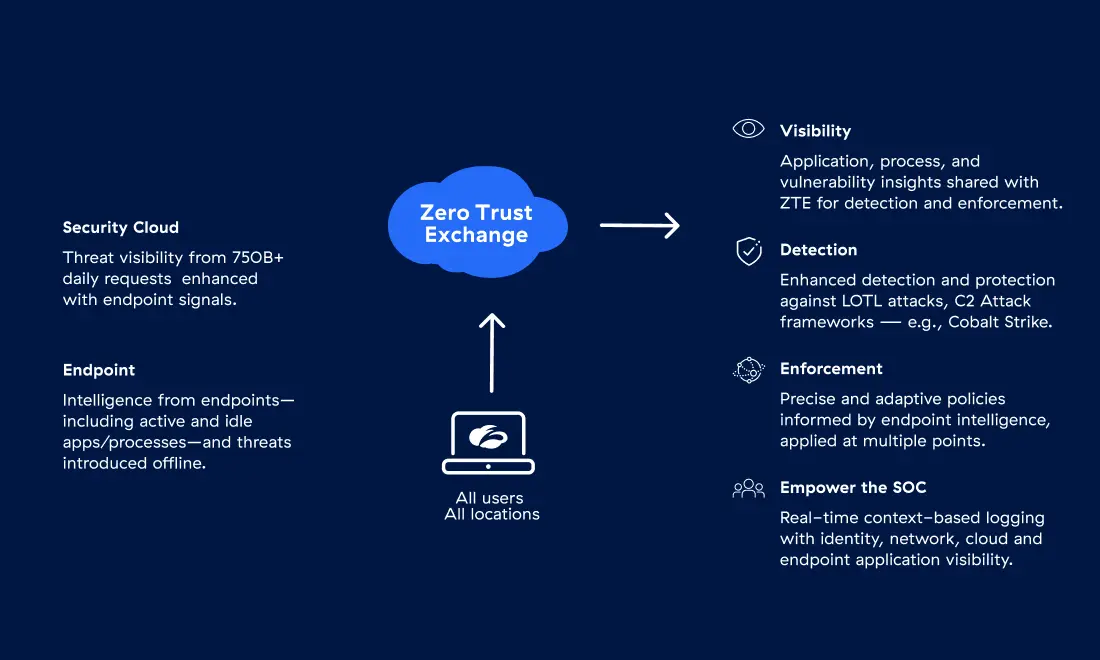
Endpoint Context combines identity, endpoint, network, and cloud signals for comprehensive visibility and adaptive risk-based policy enforcement to stop trojanized installers, malicious apps, and “living off the land” (LOTL) attacks—even inside encrypted traffic—with real-time endpoint-to-cloud correlation. Built into the Zscaler Zero Trust Exchange, our solution eliminates SecOps and NetOps blind spots, and accelerates detection and dynamic threat mitigation at scale.
Security teams struggle to gain complete visibility into which applications installed across their organization’s endpoints are unsanctioned, unpatched, and vulnerable despite the ever-increasing volume of alerts from disparate tools that must be reviewed and analyzed to be made actionable. Traditional network security tools often lack visibility into encrypted payloads and activity beyond the endpoint, exposing organizations to lateral movement and breaches.

Unified endpoint-to-cloud threat defense built on a zero trust foundation
Zscaler closes critical visibility and detection gaps with unified endpoint and cloud telemetry, inline inspection of encrypted traffic, and dynamic risk-based control—all within the Zscaler Zero Trust Exchange. By delivering comprehensive visibility and deep context, Zscaler empowers security and network teams to eliminate blind spots, detect and mitigate attacks faster, and enforce Zero Trust without disrupting operations or user experience.
Comprehensive threat visibility across endpoints and cloud
From endpoint activity to cloud, SecOps teams can close critical blind spots other tools miss—exposing hidden threats in encrypted traffic and securing organizations at scale.
Deep, context-rich insights that expose hidden threats
Going beyond surface-level detection, correlated real-time endpoint telemetry with cloud activity uncovers stealthy threats like trojanized installers, malicious apps, and encrypted payloads that traditional security tools miss.
Dynamic risk-based controls to stop threats faster
Security policies can adapt in real-time based on endpoint risk, vulnerabilities, and behavior—blocking high-risk processes and malicious activity before threats can spread.
Rapid response to empower SecOps teams
Enhanced visibility and logging reduces threat detection and response times.)

Zscaler converts endpoint signals into security action

Endpoint Telemetry and Visibility
Capture real-time process-level telemetry and stream it into ZIA logs and NSS feeds—giving NetOps and SecOps clear visibility into endpoint activity and traffic sources.

Risk-Based Policy Controls
Apply adaptive policies across Cloud Firewall, DNS, and SSL based on live telemetry and behavioral risk—bridging prevention and SecOps workflows.

Cloud Sandbox Integration
Automatically analyze offline-introduced files with AI Instant Verdict and Cloud Sandbox—delivering fast, actionable threat insights for SecOps teams.

CVE Visibility and Vulnerability Intelligence
Correlate endpoint and OS inventory with CVE data to expose vulnerable assets, prioritize patching, and tighten enforcement.

MD5 and Signature Checks
Validate file integrity using MD5 hashes and code signing to block tampered executables and support threat hunting and incident response.

Platform APIs & Integration
Leverage APIs to integrate endpoint intelligence into SIEM, SOAR, and ITSM systems—enabling alert enrichment, automation, and SecOps efficiency.
Real-world scenarios powered by endpoint visibility

Catch “Living Off the Land” techniques, unauthorized tools, and tampered installers early using real-time process telemetry and binary validation.

Expose shadow IT and known-vulnerable apps by combining app classification with CVE intelligence for better risk control.

Scan files from USB, Airdrop, or Bluetooth using AI Instant Verdict and Cloud Sandbox to block threats before they run.

Apply real-time policies that automatically block, isolate, or allow apps and processes based on behavioral risk.

Use endpoint insights to drive Firewall, DNS, and SSL/TLS decryption decisions—enabling smarter, zero trust-aligned controls.
Zscalerプラットフォーム
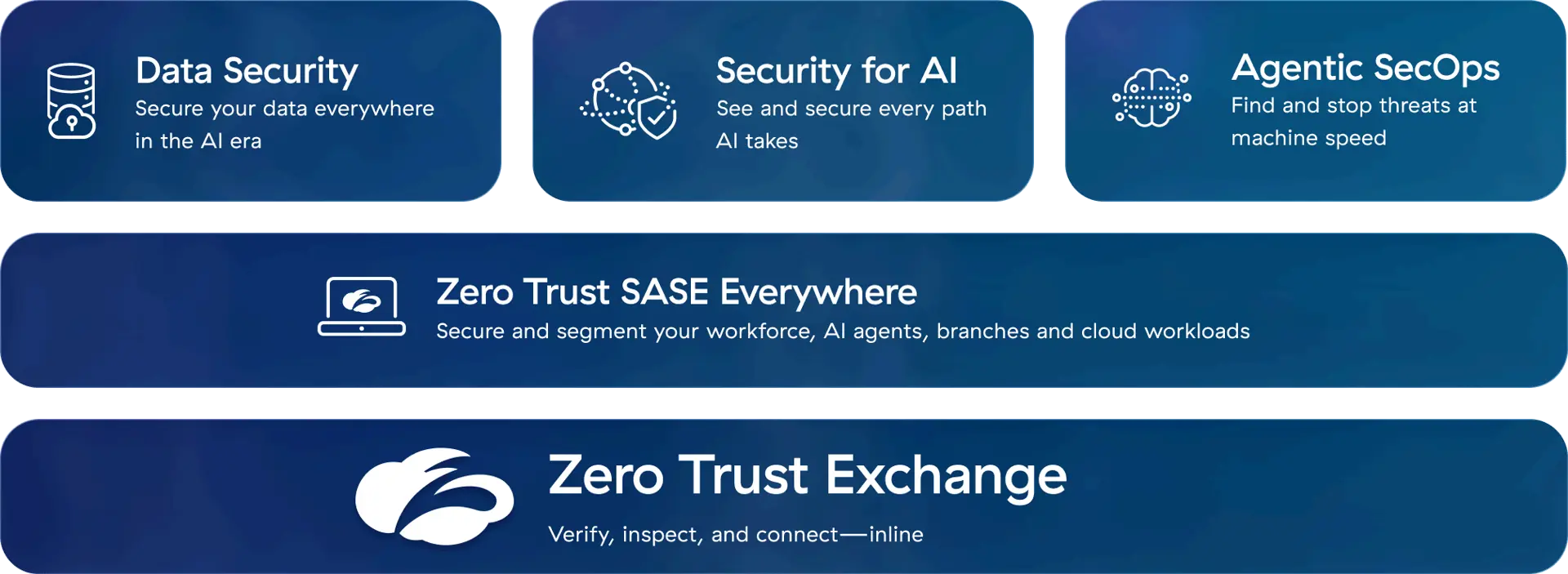
AI時代のサイバーセキュリティ プラットフォームは、ゼロトラストに基づいて構築されており、世界最大のインライン セキュリティ クラウドを通じてユーザー、ワークロード、拠点、デバイスを保護します。
Learn and explore resources
Frequently Asked Questions
User identity and network signals alone don’t always capture device trust and risk. Endpoint Context helps answer questions like:
- “Is this the user’s managed device?”
- “Is the device healthy/compliant?”
- “Is this a sanctioned app running on an endpoint?”
- “Is this access request coming from a risky endpoint state?”
The data that answers all these questions can be used as policy criteria that results in more adaptive and precise security controls.
Common signals include:
- Device identity
- OS/platform
- Management state (managed vs unmanaged)
- Posture/compliance results
- Security controls status
- Agent presence/health
- Application status (sanctioned/unsanctioned/unpatched/unsigned)
- Other endpoint attributes required for policy evaluation
Endpoint Context is optimized to minimize user impact. Any perceived delay typically comes from posture checks or signal freshness requirements. Policies should be tuned to balance security with usability. Learn more about Endpoint Context in our documentation portal.
Request a demo
Understand your threat exposure and how the Zscaler Zero Trust Exchange platform can securely and quickly transform the way you do business.