
 It used to be that when you checked your email and/or email spam folder there would be a slew of messages with links or attachments that would have titles related to the popular subjects of the time, and would be used to spread malware (think Anna Kournikova).
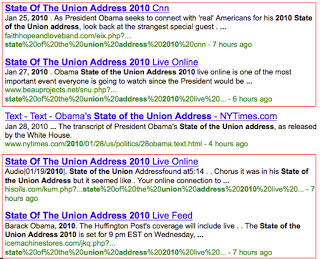
Now the game seems to be that you sip your morning coffee and browse the web - largely driven from search results from Google. However, many of these search results cannot be trusted - Google's web of trust, Page Rank technology has been leveraged by the bad guys using search engine optimization (SEO) to spread malware. This has been seen in almost every major news story this year (for example, Haiti's Earthquake) and some not so major news stories (American Idol's 'pants on the ground' audition).
The past few days, there have been numerous big headline stories with poisoned Google search results leading the victim to Fake Anti-Virus malware: Apple's iPad announcement, Toyota's safety recall, and the State of the Union address all have poisoned search results ... just wait "Super Bowl" the bad guys will get to you next if they haven't already ...
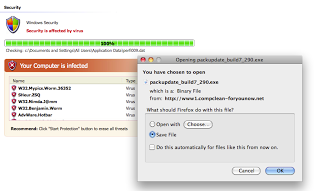
Below are some screenshots of the poisoned results, followed by the subsequent infection. Note, visiting the SEOed links directly redirects you to a benign page, such as cnn.com; visiting with a Google referrer string (which someone following the link from Google would have) takes the user to the malicious page.


Zscaler Blog
Get the latest Zscaler blog updates in your inbox

Was this post useful?


Disclaimer: This blog post has been created by Zscaler for informational purposes only and is provided "as is" without any guarantees of accuracy, completeness or reliability. Zscaler assumes no responsibility for any errors or omissions or for any actions taken based on the information provided. Any third-party websites or resources linked in this blog post are provided for convenience only, and Zscaler is not responsible for their content or practices. All content is subject to change without notice. By accessing this blog, you agree to these terms and acknowledge your sole responsibility to verify and use the information as appropriate for your needs.
Explore more Zscaler blogs




Get the latest Zscaler blog updates in your inbox

By submitting the form, you are agreeing to our privacy policy.