Zscaler Blog
Erhalten Sie die neuesten Zscaler Blog-Updates in Ihrem Posteingang
Aktueller ThreatLabz-Report: Mobilgeräte bleiben mit 111 % Spyware-Anstieg der größte Bedrohungsvektor, Angriffe auf IoT nehmen um 45 % zu
Die Rolle des CISO wird aufgrund der steigenden Zahl von Sicherheitsverstößen und Cyberangriffen wie Ransomware sowie der Anforderungen der SEC an öffentliche Organisationen zur Offenlegung wesentlicher Sicherheitsverstöße immer wichtiger.
Zu den Bereichen der Cybersicherheit in Unternehmen, die sich am dynamischsten entwickeln, zählen Mobilgeräte, das Internet der Dinge (IoT) und Systeme der Betriebstechnologie (OT). Heute greifen 96,5 % der Menschen über ein Mobilgerät auf das Internet zu und 59 % des Internettraffics wird über Mobilgeräte generiert. Mittlerweile werden OT- und cyber-physische Systeme, die einst durch eine Air-Gap-Funktion vom Internet isoliert waren, zunehmend in Unternehmensnetzwerke integriert, wo sich Bedrohungen ausbreiten können.
Um einen Überblick über diese wachsende Bedrohungslage zu gewinnen, führte das ThreatLabz-Forschungsteam von Zscaler im Zeitraum von Juni 2023 bis Mai 2024 eine detaillierte Trendanalyse für Angriffe auf Mobilgeräte und IoT/OT durch.
Insgesamt verzeichnete ThreatLabz einen Anstieg finanziell motivierter Angriffe auf Mobilgeräte – mit einem Wachstum von 111 % bei Spyware und 29 % bei Banking-Malware. Die meisten dieser Angriffe können die Multifaktor-Authentifizierung (MFA) umgehen. Gleichzeitig nahmen Angriffe auf IoT im Vergleich zum Vorjahr um 45 % zu und ThreatLabz identifizierte eine Vielzahl von Sicherheitsrisiken in OT-Umgebungen.
Dieser Blogbeitrag fasst die Haupterkenntnisse aus dem Report zusammen. Für ein umfassendes Verständnis der Trends, Fallstudien und Best Practices zur Absicherung Ihres Unternehmens laden Sie den Report von Zscaler ThreatLabz zu Bedrohungen für Mobilgeräte, IoT und OT 2024 herunter.
6 Haupterkenntnisse zu Angriffen auf Mobilgeräte und IoT/OT
Die wichtigsten Trends bei Angriffen auf Mobilgeräte und IoT/OT
1. Anstieg finanziell motivierter Bedrohungen für Mobilgeräte, darunter ein Anstieg von Spyware um 111 % und von Banking-Malware um 29 %.
- Obwohl die Zahl der Android-Angriffe insgesamt zurückgeht, nehmen finanziell motivierte Bedrohungen für Mobilgeräte zu. Die meisten davon sind in der Lage, MFA zu umgehen.
2. Die Anzahl der IoT-Angriffe hat sich im Vergleich zu unserem Bericht aus dem Jahr 2023 um 45 % erhöht, basierend auf den blockierten Angriffsversuchen in der Zscaler-Cloud.
- Zscaler blockierte 45 % mehr IoT-Malware-Transaktionen als im Vorjahr. ThreatLabz beobachtete außerdem einen Anstieg um 12 % bei der Anzahl der Versuche, Malware (Payloads) an IoT-Geräte zu übermitteln.
3. ThreatLabz entdeckt über 200 gefälschte Apps im Google Play Store.
- Hierzu zählt Anatsa, eine bekannte Android-Banking-Malware, die PDF- und QR-Code-Lesegeräte zur Verbreitung von Malware verwendet und bereits an Angriffen auf über 650 Finanzinstitute beteiligt war.
4. Veraltete und nicht mehr unterstützte Betriebssysteme (OS) machen OT-Systeme anfällig.
- Während sie früher durch Air-Gaps vom Internet isoliert waren, werden OT- und cyber-physische Systeme zunehmend in Unternehmensnetzwerke integriert, wodurch sich Bedrohungen weiter ausbreiten konnten.
- ThreatLabz hat bei einer Analyse groß angelegter OT-Bereitstellungen festgestellt, dass mindestens 50 % der OT-Systeme veraltete Betriebssysteme verwenden, viele davon mit bekannten Schwachstellen. Mittlerweile kommen im netzwerkinternen OT-Traffic zahlreiche riskante Protokolle und Dienste zum Einsatz.
Die wichtigsten Ziele bei Angriffen auf Mobilgeräte und IoT/OT
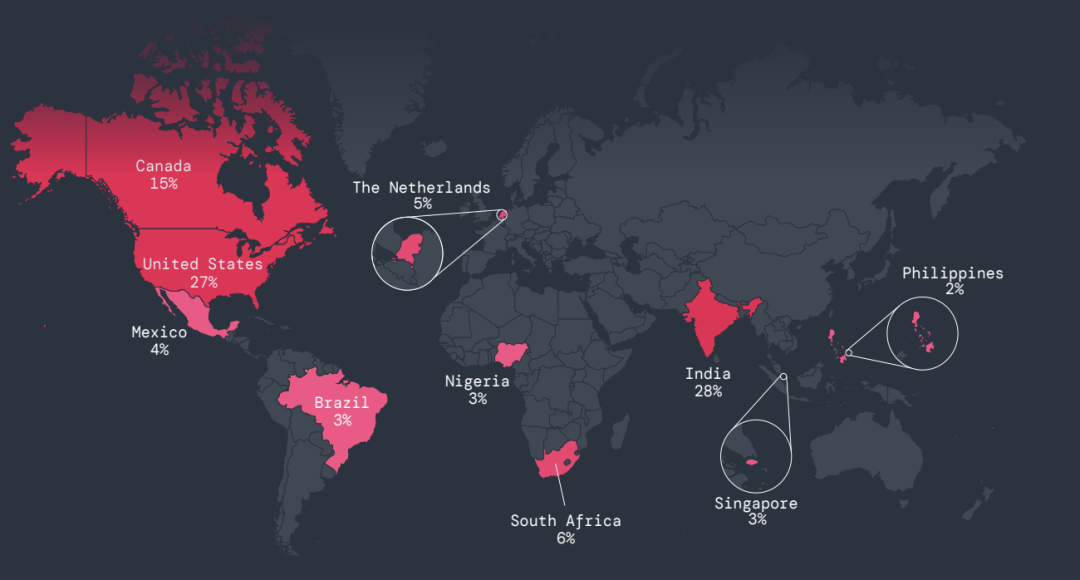
5. Mit einem Anteil von 28 % aller Angriffsversuche auf Mobilgeräte war Indien das am stärksten betroffene Land, gefolgt von den USA, Kanada, Südafrika und den Niederlanden. Wie schon im Vorjahr entfiel die Mehrzahl der IoT-Angriffe (81 %) auf Ziele in den USA, gefolgt von Singapur, Großbritannien, Deutschland und Kanada.
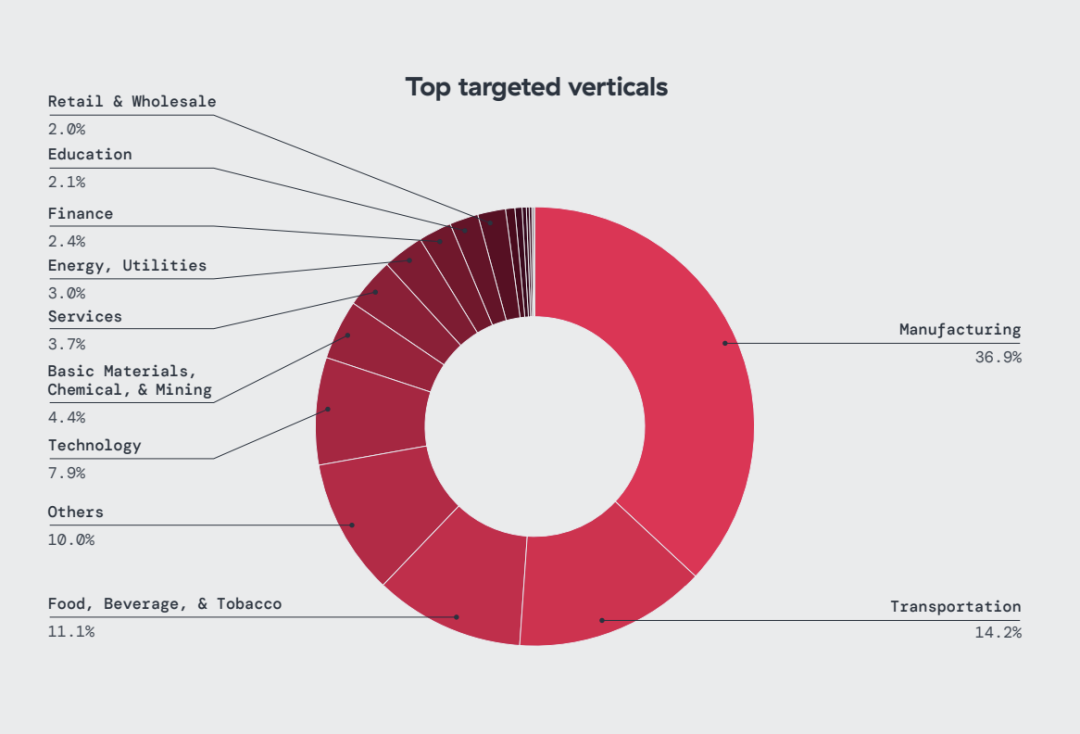
6. Die Fertigungsbranche verzeichnete die meisten IoT-Angriffe mit 36 %, gefolgt vom Transportwesen (14 %) sowie Lebensmittel, Getränke und Tabak (11 %). Die Sektoren Technologie- und Bildungswesen waren am stärksten von Bedrohungen auf Mobilgeräte betroffen.
Zuverlässiger Schutz für Mobilgeräte, IoT und OT mit Zero Trust
Cyberangriffe auf Mobilgeräte und IoT/OT werden immer komplexer. Zur Gewährleistung ihres Sicherheitsstatus müssen Unternehmen Möglichkeiten finden, das Cyberrisiko zu reduzieren, ohne auf die Vorteile der IoT- und OT-Konnektivität für die Geschäftsentwicklung zu verzichten. Tatsächlich nehmen nicht nur die Angriffe auf das IoT zu, sondern Bedrohungsakteure zielen auch aktiv auf OT-Geräte und kritische Infrastrukturen ab (siehe CISA-Warnung). Gleichzeitig benötigen Unternehmen eine Möglichkeit, Verbindungen von Mobilgeräten zu allen SaaS-basierten oder privaten Unternehmensanwendungen – ob in der Cloud oder im Rechenzentrum – zuverlässig abzusichern. Um diese Geräte und Systeme zu schützen, empfiehlt sich ein Zero-Trust-Ansatz, der Cyberbedrohungen eindämmt und ihren Sicherheitsstatus verbessert:
- IoT- und OT-Assets erkennen, klassifizieren und inventarisieren: Arbeiten Sie daran, vollständige Transparenz über Ihre IoT- und OT-Angriffsfläche zu gewinnen. Dies umfasst die Erkennung, Klassifizierung und Inventarisierung sowohl verwalteter als auch nicht verwalteter oder „Schatten“-Geräte. Mit dieser ganzheitlichen Sicht können Sicherheitsverantwortliche ihre Maßnahmen priorisieren, wichtige Schwachstellen identifizieren und einen proaktiven Ansatz zum Schutz dieser Assets entwickeln.
- Zero-Trust-Konnektivität aktivieren: Nutzen Sie eine robuste Zero-Trust-Architektur, die adaptive Zugriffsentscheidungen auf Basis der Echtzeit-Sicherheit und des Status von Usergeräten, Risikofaktoren und Gerätetelemetrie ermöglicht und so sichere Direktverbindungen zwischen Endgeräten und Anwendungen gewährleistet – niemals zum zugrunde liegenden Netzwerk.
- Zero-Trust-Gerätesegmentierung erzwingen: Wenden Sie Zugriffskontrollen nach dem Prinzip der minimalen Rechtevergabe zur Segmentierung einzelner Verbindungen zwischen Geräten, Anwendungen, Usern und Anwendungen an. Diese granulare Segmentierung verhindert die Ausbreitung von Sicherheitslücken, minimiert das Risiko der Datengefährdung und stärkt Ihre allgemeine Sicherheitslage, indem sie das Risiko verringert, dass ein einzelnes kompromittiertes Gerät das gesamte Netzwerk gefährdet. Dazu gehört die Isolierung und vollständige Segmentierung von IoT/OT-Geräten ohne Agents, einschließlich Legacy-Server und Headless-Rechner.
- Konsistente Zero-Trust-Sicherheitsrichtlinien anwenden: Stellen Sie sicher, dass Zero-Trust-Zugriffsrichtlinien in allen Umgebungen konsistent durchgesetzt werden, unabhängig davon, ob sich User, die auf Anwendungen zugreifen, in der Unternehmenszentrale, in Filialen oder Zweigstellen oder an Remote-Standorten befinden.
Holen Sie sich noch heute Ihr Exemplar des Reports von Zscaler ThreatLabz zu Bedrohungen für Mobil- und IoT/OT-Geräte 2024. Angesichts der zunehmenden Gefährdung durch Angriffe auf Mobil- und IoT/OT-Geräte sollten Sie unbedingt über aktuelle Trends, die Auswirkungen derartiger Angriffe sowie die Best-Practice-Strategien Bescheid wissen, die Sie zum Schutz Ihrer Organisation anwenden können.

War dieser Beitrag nützlich?


Haftungsausschluss: Dieser Blog-Beitrag wurde von Zscaler ausschließlich zu Informationszwecken erstellt und wird ohne jegliche Garantie für Richtigkeit, Vollständigkeit oder Zuverlässigkeit zur Verfügung gestellt. Zscaler übernimmt keine Verantwortung für etwaige Fehler oder Auslassungen oder für Handlungen, die auf der Grundlage der bereitgestellten Informationen vorgenommen werden. Alle in diesem Blog-Beitrag verlinkten Websites oder Ressourcen Dritter werden nur zu Ihrer Information zur Verfügung gestellt, und Zscaler ist nicht für deren Inhalte oder Datenschutzmaßnahmen verantwortlich. Alle Inhalte können ohne vorherige Ankündigung geändert werden. Mit dem Zugriff auf diesen Blog-Beitrag erklären Sie sich mit diesen Bedingungen einverstanden und nehmen zur Kenntnis, dass es in Ihrer Verantwortung liegt, die Informationen zu überprüfen und in einer Ihren Bedürfnissen angemessenen Weise zu nutzen.
Weitere Zscaler-Blogs erkunden

Ransomware-Report von ThreatLabz: 75 Millionen US-Dollar Lösegeldzahlung bei zunehmenden Angriffen

New AI Insights: Explore Key AI Trends and Risks in the ThreatLabz 2024 AI Security Report

Neuer Report zu VPN-Risiken: 56 % der Unternehmen werden über VPN-Schwachstellen angegriffen
Erhalten Sie die neuesten Zscaler Blog-Updates in Ihrem Posteingang

Mit dem Absenden des Formulars stimmen Sie unserer Datenschutzrichtlinie zu.